
Machine Comparison
The portable line boring machine versus conventional repair comparison is not really about the hourly rate of either method. It is about what has to move. Conventional repair takes the assembly out of service, lifts it, transports it to a machine shop, sets it up on a boring machine, bores it, brings it back, realigns it and recommissions it. A portable machine travels to the assembly and cuts the bore where the part sits, so the asset never leaves its foundation. That difference shows up as downtime, as crane and freight cost, and as the risk of introducing a new alignment error on reassembly. Portable boring wins when the assembly is large, hard to dismantle or expensive to stop; conventional machining still wins when the bore geometry is damaged beyond what an on-site setup can correct.
The two routes in one table
Both routes remove material from the same bore to the same drawing. What differs is where the cutting happens and how many times the part is handled.
| Behaviour | Portable line boring | Conventional repair |
|---|---|---|
| Where the cut happens | On the assembly, in place | In a machine shop, on a boring machine |
| Dismantling | Usually none beyond access | Full removal of the assembly |
| Lifting and transport | Not required | Crane out, freight both ways, crane back in |
| Datum for alignment | The machine’s own bore and mounting face | The shop’s setup, then the machine’s foundation on reassembly |
| Rigidity of the setup | Lower; light passes, more checking | Highest; a floor borer takes heavy cuts |
| Bores per setup | Several co-axial bores on one line-bar | Several, if the part fits the table |
| Dominant cost | Mobilisation and on-site hours | Handling, freight, shop hours, recommissioning |
| Dominant downtime | The boring itself plus access | Removal, transport, queue, machining, return, realignment |
What conventional repair really involves
A conventional repair starts with disconnection: piping, wiring, couplings, guards and anything else attached to the assembly. Then the lift, which needs a crane of adequate capacity and a rigging plan, and often a roof opening or a clear travel path. Then transport to the shop, which for a large housing means a low-bed trailer and permits.
In the shop the part is set up on a horizontal boring machine, indicated to a datum, bored, and checked. That part of the job is efficient and accurate, because a floor borer is a rigid machine with a large capacity. The difficulty is everything around it.
Then the part travels back, is lifted again, set back on its foundation, realigned to whatever it drives or carries, shimmed, coupled and recommissioned. Each of those steps is a chance to introduce an error that did not exist before, and the realignment is often the step that consumes the most skilled hours.
The engineering work in a conventional repair is sound. The problem is that the bore is a small part of the total job, and the handling around it is what drives the schedule.
What a portable line boring machine changes
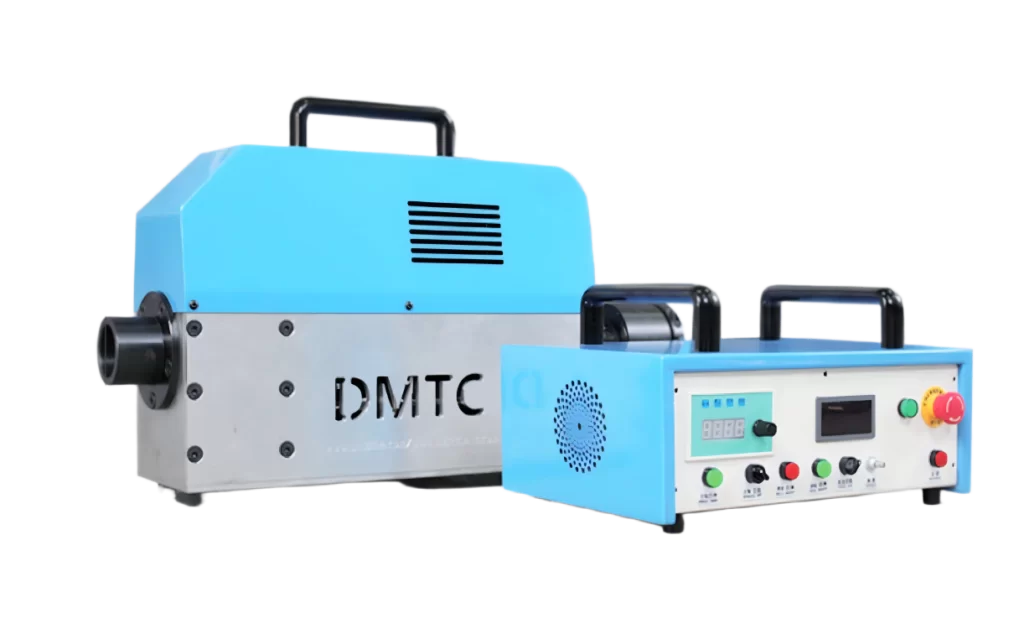
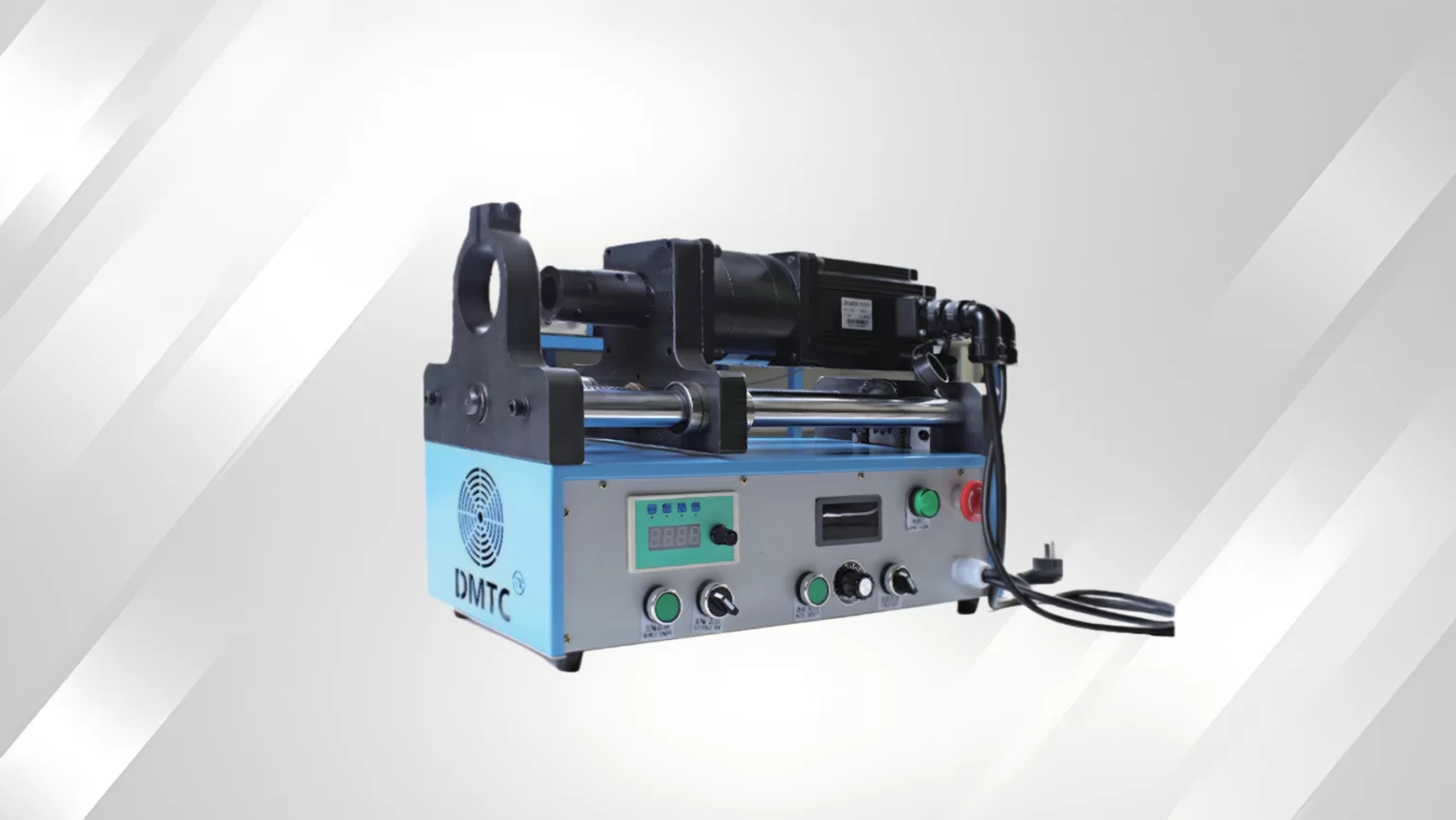
A portable line boring machine is a bar carried in bearing supports that are bolted or clamped to the workpiece, with a drive unit and a tool head that feeds along the bar. Because the supports mount on the assembly, the bore is cut on the same axis that the assembly will use in service, and the assembly never leaves its foundation.
That removes the handling chain. There is no crane, no freight, no shop queue, no reassembly and no re-alignment, because nothing was dismantled. For a press frame, a crane end carriage, a crusher housing, a ship’s stern tube or a mill stand, the saving is not in the cutting hours — it is in the eight steps that no longer happen.
It also handles the case where the part cannot be moved at all: a weldment built into a structure, a housing under a roof that cannot be opened, or an assembly whose removal would require dismantling adjacent machinery. In those situations the comparison is not cost against cost; one route simply does not exist.
The trade is rigidity. A bar supported on two brackets in a workshop is less stiff than a boring spindle in a heavy column, so cuts are lighter and the operator checks more often. That is a real limitation and it belongs in the plan, not in the sales conversation.
Building the cost comparison
The honest way to compare is to list every bucket on both sides, then fill in your own figures. Most comparisons go wrong because they only count the machining hours.
| Cost bucket | Portable line boring | Conventional repair |
|---|---|---|
| Mobilisation | Transport of the boring set to site, access planning | — |
| Lifting and rigging | Only for access, often none | Crane in, crane out, rigging plan |
| Freight | None for the workpiece | Two ways, plus permits for an oversize load |
| Cutting hours | On-site rate, lighter passes | Shop rate, heavy passes |
| Set-up | Mounting and indicating on the machine | Indicating on the boring machine, then realignment on site |
| Reassembly | Not required | Piping, wiring, couplings, guards |
| Recommissioning | Not required | Realignment, shimming, test run |
| Scaffolding and site works | Often required | Rarely |
Two rules keep the model honest. First, count the welding and stress relief separately: if the bore is worn because the housing distorted, correcting the bore before relieving the distortion reproduces the problem. Second, price the risk of a new alignment error separately from the machining, because a conventional repair that comes back out of alignment costs far more than the difference between the two methods.
The crossover is easiest to find by counting bores and distance. A single small bore in a part that can be lifted by a forklift almost always goes to a shop. A line of co-axial bores in a heavy housing at a remote site almost always goes portable. Between those two, the number that decides it is the downtime, not the invoice.
Downtime is the larger number
Downtime is where the comparison usually breaks down, because it is not on any quotation and it is often the largest cost in the project.
- Conventional: the asset is down for the whole chain — removal, transport, shop queue, machining, return, realignment and test run. Most of that time the machine is not being cut, it is waiting or travelling.
- Portable: the asset is down for the access, the mounting, the boring and the clean-up. There is no transport leg and no reassembly, so the schedule is set by the cutting, not by logistics.
- Both: the hidden leg is the wait for a shop slot or for a crew to be available. That is a scheduling question, and it should be asked at the quotation stage rather than discovered later.
For a production asset, the cost of the downtime leg is usually what decides the route. That is why the comparison should be presented to whoever owns the machine in terms of days out of service, not in terms of machine hours.
One more habit makes the comparison usable: keep the record. Note the bore measurements before and after, the mounting arrangement, the bar span and the passes used. When the same machine comes back for the same bore, the record turns a first-time job into a known quantity, and it is the best defence against a repair that quietly becomes routine maintenance.
The question that decides it
Ask what has to be dismantled to get the bore onto a shop machine. If the answer is "the assembly, plus the pipework and the coupling, and the roof has to be opened", the portable route removes most of the project. If the answer is "nothing, it fits on a pallet", the shop is cheaper and more accurate.
When conventional machining is still right
Portable boring is not always the answer, and saying so is part of quoting it honestly.
| Bore geometry is damaged | A portable bar follows a line; it cannot correct a bore that is out of round by more than the setup can absorb in a few passes. |
|---|---|
| Housing is cracked or distorted | Weld repair and stress relief come first. Boring before relieving the distortion reproduces the fault. |
| Very heavy material removal | A floor borer takes heavier passes. If a large amount of metal must come out, the shop is faster. |
| The part is small and portable | If it fits on a pallet, the handling chain is short and the shop wins on both accuracy and price. |
| Tightest geometry and finish | Where roundness, cylindricity and finish are at the limit, the more rigid machine is the safer choice. |
| Access is impossible | No mounting face, no room for the bar, no safe platform: the portable set-up cannot be built. |
Where the work does go portable, the accuracy comes from the mounting and the referencing, not from the bar alone. Reference the bore to the undamaged part of itself or to a machined face, never to the worn area, or the new bore inherits the old wear. The same discipline applies to guideway work, which is covered in box way versus linear guideway.
What to write into the enquiry
The bore
- Bore diameter, length and the number of co-axial bores on the line
- The condition: measured wear, ovality and taper, with the measuring method
- Tolerance and surface finish required, and whether a bush or sleeve will be fitted
- Material and whether the bore is hardened or has a welded repair
The site
- Access: platform, scaffolding, headroom, and how the machine will be brought in
- Power available on site and the working height
- Whether the assembly can be isolated, and for how long
- A photo of the bore area with something for scale
Frequently asked questions
Is a portable line boring machine as accurate as a shop borer?
Not inherently. The bar is supported on brackets rather than in a heavy column, so the setup is less rigid and the passes are lighter. With a sound mounting and careful referencing it holds good commercial tolerances; for the tightest geometry the shop machine is the safer route.
Can it bore several co-axial bores in one set-up?
Yes, and that is one of its main advantages: a single bar through several supports machines a line of bores on one axis, which is exactly the relationship that a repair usually has to restore. It is also why the support positions have to be planned before the work starts.
How much downtime does it save?
It removes the transport, the shop queue and the reassembly legs, so the schedule is set by access and cutting rather than by logistics. The size of the saving depends on how far the shop is and how much has to be dismantled, which is why the two routes are best compared in days out of service.
Can it correct a bore that is already oval?
Only within the amount of material the setup can remove in a controlled way. If the ovality is large, or the housing has distorted, the correction is a shop job after any weld repair and stress relief.
What does the machine need on site?
A sound mounting face for the supports, room for the bar on both sides of the bore, power, and safe access. Those four items decide whether the set-up can be built at all, so they belong in the enquiry rather than in the site visit.
Send the bore details, and we will tell you which route
Send the bore diameter and length, the number of co-axial bores, the measured wear and a photo of the area with something for scale. We will tell you whether a portable line boring machine can be mounted there, or whether the part belongs on a shop machine, and what the mounting will need.
Send your bore dataSee portable boring machines
WhatsApp +86 15502628547 · info@dhlathe.com
For the portable line boring machine versus conventional repair decision, state how much has to be dismantled. It decides the route more often than the bore size does.
