
Machine Comparison
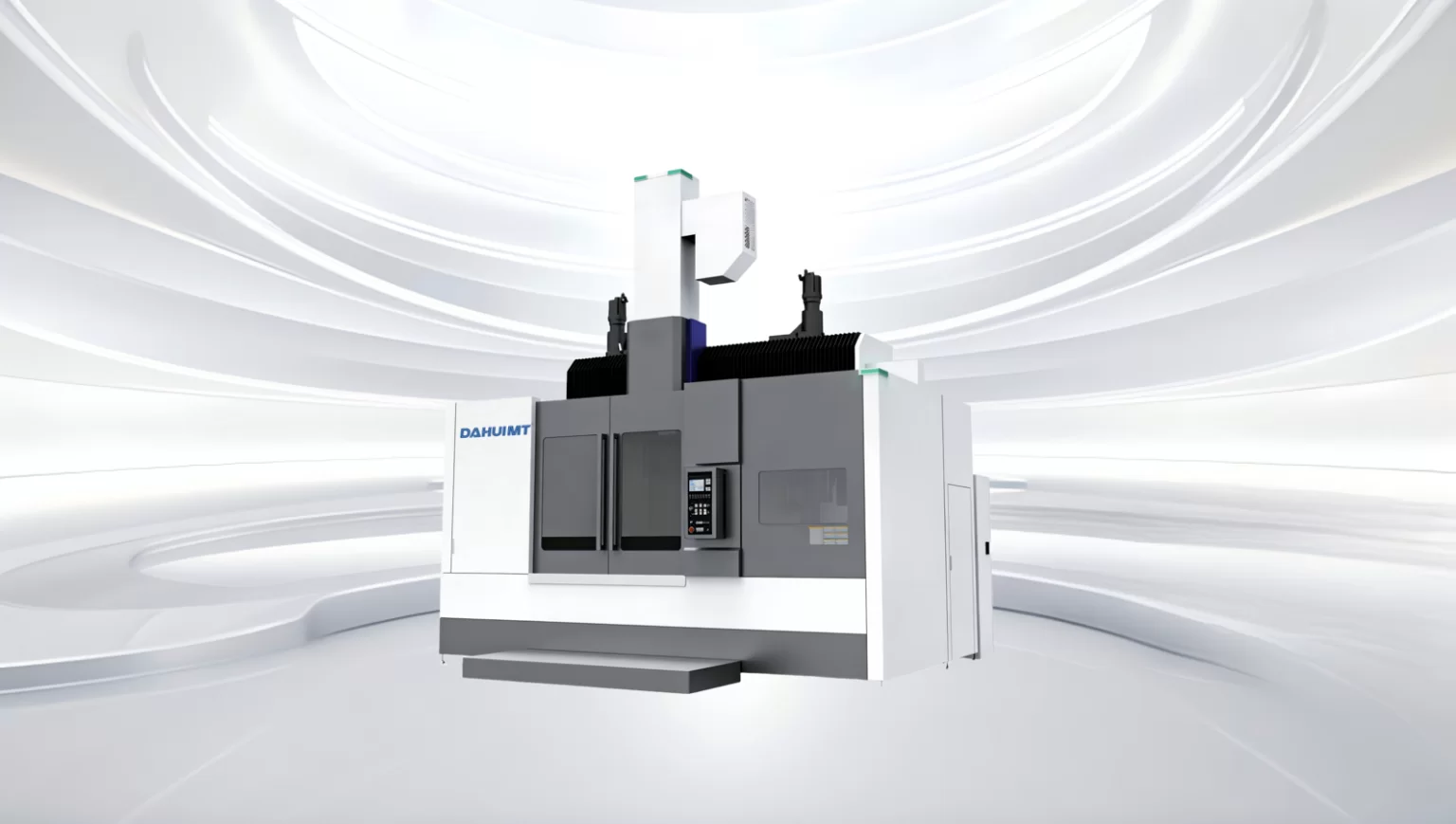
For a large disc, the vertical versus horizontal lathe question is decided by gravity and by how the part is held. A vertical lathe clamps the workpiece flat on a rotating table, so its weight sits on the table instead of hanging off a chuck, the diameter is limited by the table and the swing rather than by a spindle bore, and a crane can lower the part straight into position. A horizontal lathe holds the part on a chuck or faceplate on a horizontal spindle, which is efficient for shafts and for discs that are thick relative to their diameter. Below a certain diameter-to-thickness ratio the two overlap; above it, a vertical lathe is the only sensible way to hold the part.
The vertical vs horizontal lathe difference in one table
Both machines turn a part about its own axis, which is why the vertical vs horizontal lathe comparison comes down to one thing: whether that axis is vertical or horizontal. Everything else follows from it.
| Behaviour | Vertical lathe | Horizontal lathe |
|---|---|---|
| Part orientation | Flat on a rotating table, axis vertical | On a chuck or faceplate, axis horizontal |
| How the weight is carried | On the table, in compression | Cantilevered from the chuck |
| Clamping | Jaws or clamps on the face, often with a large through-bore | Chuck jaws, or faceplate and bolts |
| Diameter limit | Table diameter and swing | Swing over bed and chuck capacity |
| Loading | Crane from above, straight down | Crane from the side, or a lifting fixture |
| Height of the machine | Tall; the part sits under the cross rail | Low; the part sits at spindle height |
| Best part shape | Thin discs, rings, flanges, housings | Shafts, thick discs, parts needing tailstock support |
| Chip and coolant | Falls onto the table and into the base | Falls into the bed and the chip conveyor |
Why large discs go vertical
A disc that is one metre across and eighty millimetres thick is a floppy part. Held on a horizontal chuck, its own weight bends it away from the chuck face, and the amount of bend changes as the jaws are tightened and as the part warms. Machined that way, it springs back when released, and the flatness you measured on the machine is not the flatness the customer receives.
On a vertical lathe the same part lies on a table and is supported across its whole face. Gravity pulls it onto the table rather than away from the fixture, so clamping force can be lower and the distortion that comes from clamping is smaller. That is the single strongest argument for the vertical layout, and it gets stronger as the diameter-to-thickness ratio grows.
Loading is the second argument. A crane lowers the part onto the table, the operator can walk around it, and the diameter is presented to the tool without reaching over a bed. For a part that weighs several tonnes, that is a safety and a time saving on every cycle.
When a horizontal lathe still wins
A horizontal lathe wins whenever the part needs support along its length. A shaft, a roll, a spindle or a long tube needs a tailstock and often a steady rest, and that geometry is natural on a horizontal bed. The same applies to a disc that is thick enough to be stiff: a bearing housing with a long bore is better held on a chuck with a tailstock than on a table where the bore is deep below the tool.
Horizontal machines are also cheaper for a given swing, easier to integrate with bar feeders and gantry loaders for smaller work, and far more common in the second-hand market. For a shop whose discs are mostly under a few hundred millimetres, a horizontal lathe with a large chuck covers the work and leaves the floor space for something else.
The practical boundary is not a single number. It is the point where the part starts to deflect under its own weight, or where the chuck pressure needed to hold it starts to distort it, or where the crane cannot present it to the chuck safely. Those three tests are described below.
The disc test
Measure the part’s diameter and thickness, then ask two questions: does it deflect measurably under its own weight when held at the rim, and can the chuck hold it without distorting it? If either answer is yes, the vertical layout is the safer choice.
The limits that decide the size
Once the layout is settled, four numbers set the machine size.
- Table diameter and swing. The part must fit inside the swing under the cross rail, and the table must carry its mass with the clamps outside the working area.
- Table load. The rated load includes the part, the fixture and any balancing weights. Ask for the figure with the table at speed, not static.
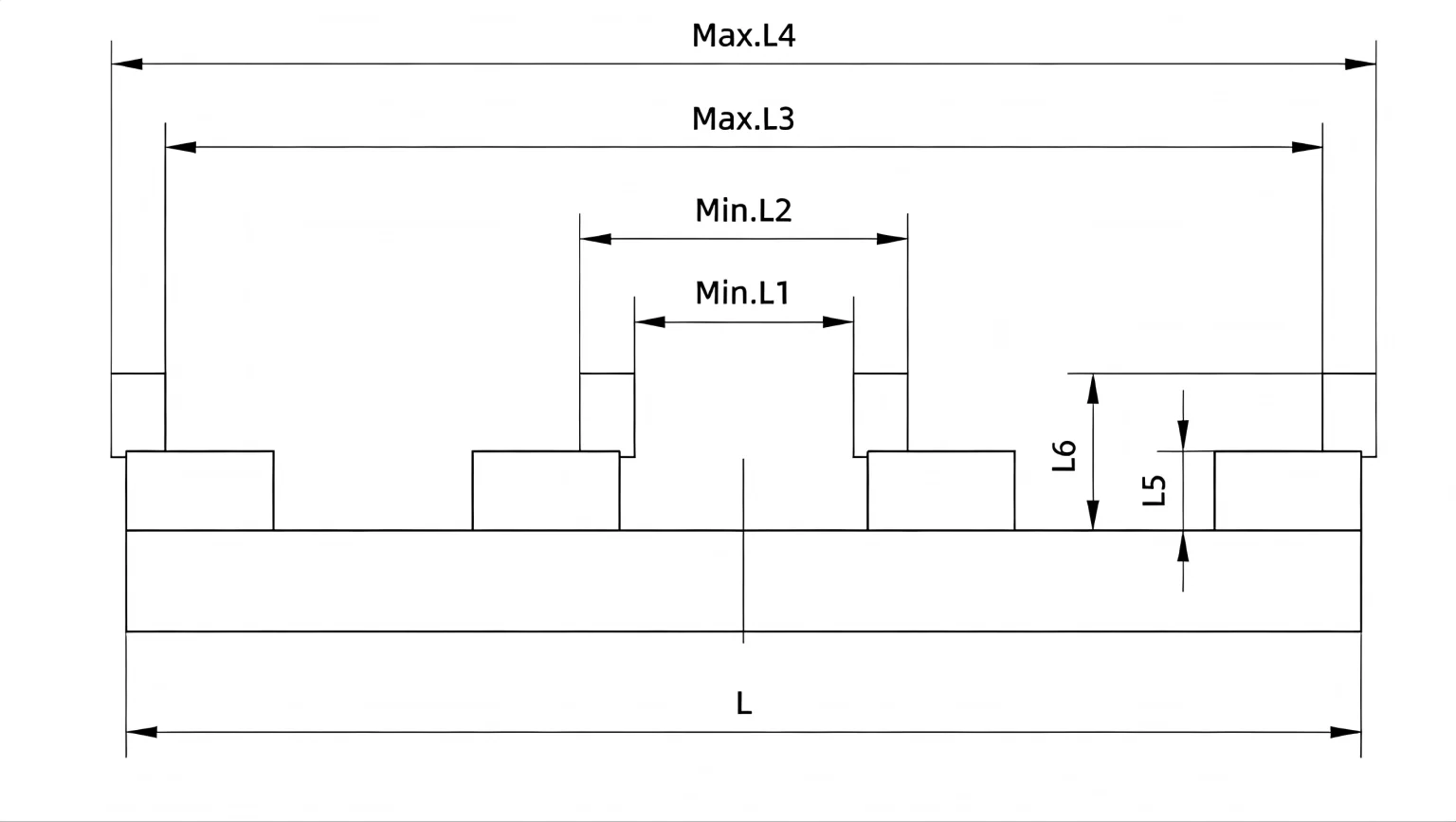
- Maximum table speed at diameter. Cutting speed is set by the surface speed, so a large diameter turns slowly. Confirm the table can hold a stable low speed without stick-slip, because that is where finish problems appear.
- Height and pit. A vertical lathe is tall, and the part has to be lifted over the rail. Check the crane hook height and the building clearance before the machine is ordered.
For parts that are large but not disc-shaped, the comparison shifts to bed type, which is covered in slant bed versus flat bed CNC lathe.
A decision sequence
| 1. Diameter to thickness | Above roughly four to one, gravity deflection starts to matter and the vertical layout gains. |
|---|---|
| 2. Mass and lifting | If the part must be craned, the vertical layout removes the side-loading problem entirely. |
| 3. Bore depth and tooling reach | Deep bores below the face favour a horizontal machine with a tailstock and long boring bars. |
| 4. Batch and cycle | Repeat discs with facing and O-ring grooves suit a vertical machine; mixed shaft work does not. |
| 5. Building and floor | Hook height, pit, and the footprint of a tall machine versus a long bed. |
What to write into the enquiry
The part
- Maximum diameter and thickness, and the mass of the heaviest part
- The tolerance on flatness, parallelism and bore position
- Which surfaces are machined, and whether the part is machined on both faces
- Material and blank form — casting, forging, plate or rolled ring
The machine
- Table diameter, swing, and rated table load at working speed
- Lowest stable table speed and the torque available there
- Clamping method and the jaw range for your diameter
- Crane hook height and building clearance at the installation position
Three disc families
Most large-disc work falls into three families, and each one leans the vertical vs horizontal lathe decision a different way.
Flanges and rings. Thin relative to diameter, often with a raised face and a bolt circle. They deflect under their own weight the moment they are held at the rim, so the flatness requirement is what matters. A vertical machine supports the whole face and lets the clamping force stay low; this is the family that justifies the table.
Brake drums, wheels and hubs. Thicker, with a bore and a face that must run true to each other. Here the part is stiff enough for either layout, and the decision usually follows the bore depth: a deep bore below the face is easier to reach on a horizontal machine with a tailstock than on a table where the tool has to reach down inside.
Bearing housings and gearbox covers. Medium diameter, deep bores, tight concentricity between bore and face. Many shops machine these on a horizontal lathe with a large chuck and a tailstock, then finish the face on the same setup. A vertical machine becomes attractive only when the diameter grows past what a chuck can hold without distortion.
The three families also explain why the vertical vs horizontal lathe decision is rarely made once. A shop that starts with flanges will later meet a housing with a deep bore, and the machine that was right for the flange may be wrong for the bore. The honest approach is to size the first machine for the family that dominates today, and to accept that the second purchase will be a different layout rather than a bigger version of the same one.
That is also why the vertical vs horizontal lathe comparison should include the crane and the building, not only the part. A machine that fits the part but not the hook height is not a machine at all, and the error is expensive to discover after the foundation is poured.
Finally, record the readings. Diameter, flatness and bore position measured on the machine are not the same as measured on the floor, and a first-article record taken at the right temperature is what tells you whether the part changed or the machine did. That record is also the baseline for the next time the same disc family comes back.
Frequently asked questions
Can a large disc be machined on a horizontal lathe at all?
The vertical vs horizontal lathe decision is not absolute. Yes, many are, particularly when the part is thick enough to be stiff or when a faceplate and a support spider are used. The risk is deflection and clamping distortion, which show up as flatness error after the part is released.
Why is a vertical lathe slower?
The table turns slowly because the diameter is large: surface speed is what matters for the tool, and a big diameter reaches that speed at low rpm. The machine is not slower by design; the part geometry sets the speed.
Do I need a pit for a vertical lathe?
Often the table sits above floor level, so the operator works at a comfortable height without a pit. What you do need is headroom for the crane and the part, and that is usually the binding constraint.
What about machining both faces?
That is a two-setup job unless the machine has a second head or the part is turned over. Ask how the machine handles the second face and whether the fixture keeps the datum, because that decides the flatness and parallelism you can hold.
How do I know which size to buy?
Size from the largest part you will actually run in the next three years, not the largest you might run someday. Oversizing a vertical lathe costs floor space, crane height and money, and the extra capacity is rarely used.
Send the disc, and we will tell you which axis
Send the diameter, thickness, mass and the flatness you must hold, plus how the part will be loaded. We will tell you whether a vertical lathe or a horizontal machine is the right holder for it, and what the clamping range looks like at your diameter.
Send your part dataSee vertical lathes
WhatsApp +86 15502628547 · info@dhlathe.com
For the vertical vs horizontal lathe choice, include the crane hook height if the part has to be lifted. It eliminates more machines than any tolerance figure.
