
Machine Comparison
The vertical versus horizontal machining center decision is decided by the shape of the part and the number of faces it has to be machined on. A vertical machine brings the spindle down onto a part lying flat on the table, which suits flat, wide, single-face work and is easy to load and see. A horizontal machine works on the side of the part and indexes a tombstone, which suits box-shaped parts with features on four faces, and it evacuates chips by gravity. One is not more advanced than the other; the horizontal machine earns its price when the part needs four faces in one setup, and costs you when it does not.
The vertical vs horizontal machining center difference in one table
The vertical vs horizontal machining center comparison starts from a fact that is easy to forget: both use the same control, the same tools and the same cutting physics. What changes is the direction the spindle points and how the part is presented to it.
| Behaviour | Vertical machining center | Horizontal machining center |
|---|---|---|
| Spindle orientation | Vertical, tool comes down onto the part | Horizontal, tool comes in from the side |
| Typical part | Plates, moulds, housings with one dominant face | Box parts, valve bodies, pump housings, gearboxes |
| Faces per setup | Usually one, sometimes two with an indexer | Four, using a tombstone or a rotary table |
| Chip evacuation | Chips sit on the part and in pockets | Chips fall away from the cutting zone |
| Loading and visibility | Open front, easy to see and load | Enclosed, pallet or tombstone loading |
| Floor space per spindle | Compact | Larger, plus pallet storage if automated |
| Automation fit | Robot or gantry loading onto a table | Pallet pool, multi-pallet lights-out running |
| Price for a given size | Lower | Higher, and the tooling and pallets add to it |
What a vertical machine is good at
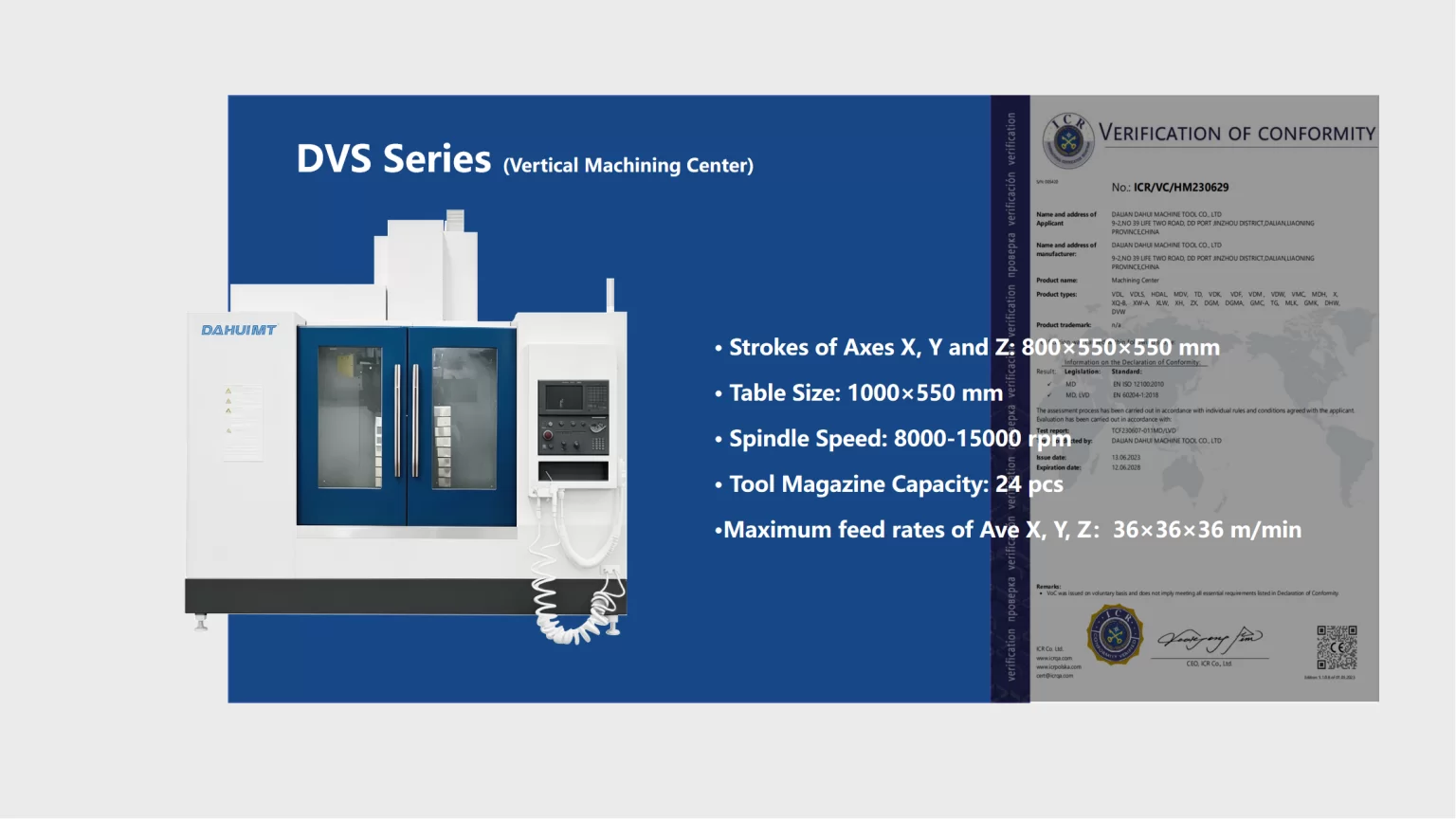
A vertical machining center is the default for a reason: the part sits on a table in front of the operator, the tool comes down where the work is visible, and setting up a new job takes minutes rather than an hour. For plates, mould cavities, brackets and any part where most of the value is on one face, the vertical layout is the shortest path between a drawing and a finished part.
It also holds its accuracy well on that face. The spindle is supported directly above the cut, the load path is short, and the table carries the part without a tombstone in between. For a shop running a wide variety of jobs in small batches, that flexibility is worth more than the extra faces a horizontal machine can reach.
The limitation appears as soon as the part needs a second, third and fourth face. On a vertical machine those faces mean re-fixturing, and every re-fixture is a chance to lose datum. An indexer helps, but a fourth-axis rotary on a vertical table is not the same as a tombstone carrying four parts on four faces.
What a horizontal machine is good at
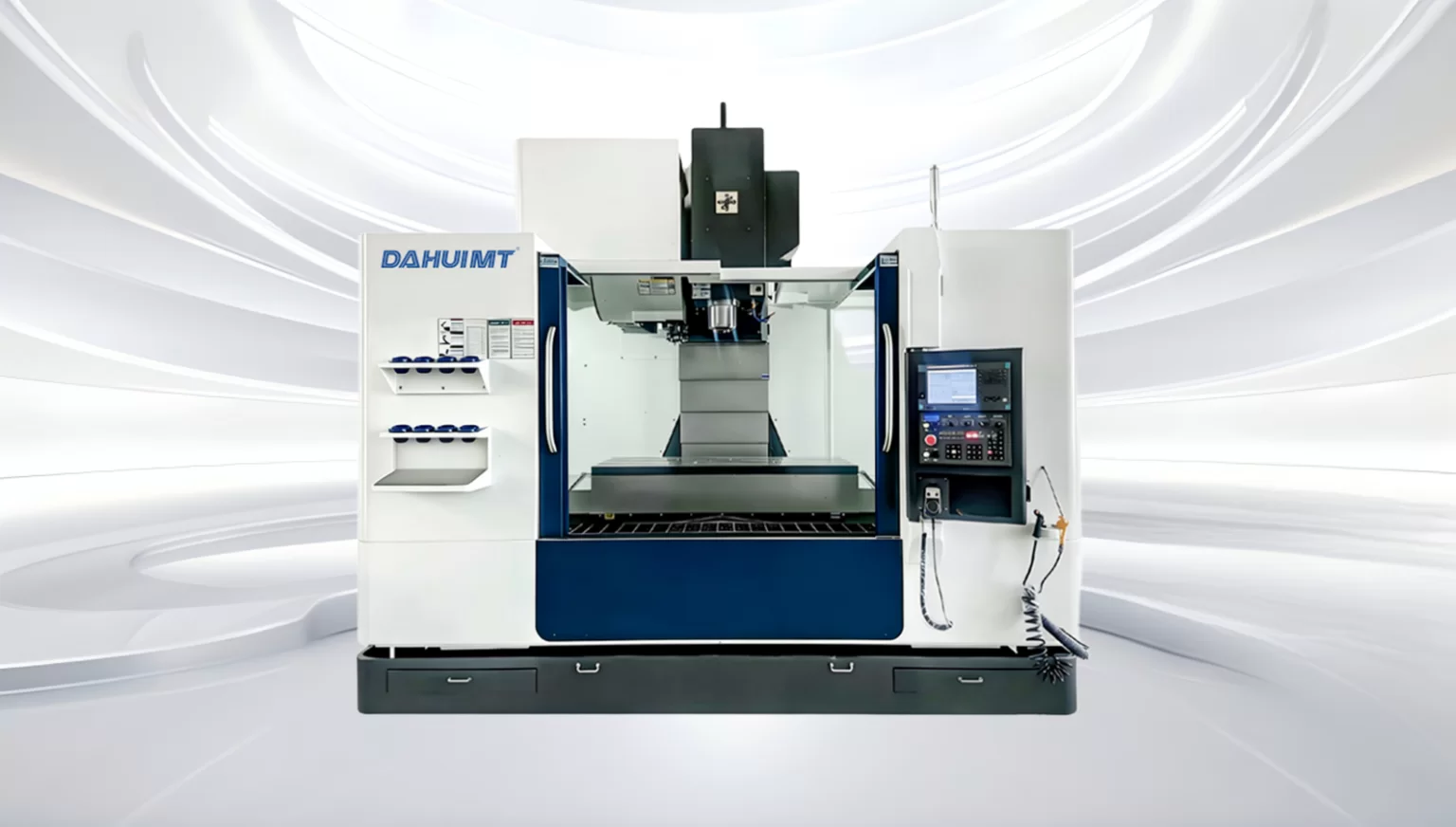
A horizontal machining center puts the spindle on its side and the part on a tombstone, so the machine can reach four faces by rotating the pallet rather than by re-fixturing the part. For a box-shaped component with bores and faces on several sides, that is the difference between one setup and four, and it removes the cumulative error that four setups introduce.
Chips fall away from the cut instead of piling on the part, which matters on cast iron and on any operation with high metal removal: a horizontal machine does not re-cut its own swarf. The enclosure also makes it a natural fit for pallet automation, because the part arrives on a pallet and leaves on one, and a pool of pallets lets the machine run unattended between shifts.
The cost is real. The machine is bigger and heavier for the same travels, the tombstone and pallets are extra, tooling usually needs to reach further, and programming has to think in terms of work offsets on multiple faces. A shop that buys one for single-face work has paid for capability it never uses.
The test that settles it
Count the faces that carry tolerance on the part, and ask how many of them must be machined in one setup to hold the relationship between them. If the answer is three or four, a horizontal machine is doing real work. If it is one, the vertical machine is the cheaper way to the same part.
Deciding from the part
Whichever way the vertical vs horizontal machining center question is leaning, work through these in order; the first two usually decide it.
| 1. Faces and datums | How many faces carry tolerance, and which relationships between them must survive. This is the strongest single predictor. |
|---|---|
| 2. Part size and mass | A horizontal machine handles a cube-shaped part well; a long plate is awkward on a tombstone and natural on a vertical table. |
| 3. Batch and changeover | Small batches with frequent changeovers favour the vertical machine; repeat families favour the horizontal with pallets. |
| 4. Automation intent | Pallet pool and lights-out running point to horizontal. Robot loading onto a table points to vertical. |
| 5. Floor space and budget | Include the tombstone, pallets and tooling, not just the machine price. |
Two further notes. First, a five-axis vertical machine changes this comparison, because it can reach faces that used to require a horizontal; the trade-off is discussed in 5-axis versus 3-axis machining. Second, the guideway and structural choices inside either machine matter as much as the layout, which is covered in box way versus linear guideway.
Where the cost actually sits
The purchase price is the visible part. The rest is in the setup and the fixtures.
- Tombstones and pallets. A horizontal machine needs them, and they are not free. Budget for at least two pallets per machine if you intend to run unattended.
- Tooling reach. Longer tools and larger holders, with the corresponding torque and clearance implications.
- Programming. Multiple work offsets per pallet, and a post-processor that handles face rotation correctly.
- Floor and foundation. Heavier machine, larger footprint, and often a pit or a raised foundation for chip management.
- The vertical machine’s hidden cost. Re-fixturing time and scrapped parts from datum loss, which never appears on a quotation.
Set the two against each other honestly: a horizontal machine that removes three setups per part can pay for its pallets in a year, and a vertical machine bought for four-face work will cost more in re-fixtures than the price difference ever showed.
What to write into the enquiry
Part data
- The part drawing, with every tolerance-bearing face marked
- Material and blank form, and the largest and heaviest part in the family
- Annual volume and batch size, plus the changeover frequency you expect
- The faces that must be machined in one setup, and why
Machine data
- Required travels, table or pallet size, and maximum part mass
- Spindle taper, speed range and torque at the cutting diameter
- Tool magazine capacity and the largest tool you must hold
- Automation intent: pallet pool, robot, or manual loading
Three shop profiles
Reading a comparison table is one thing; recognising your own floor in it is another. Three profiles cover most of the machines sold, and in each of them the vertical vs horizontal machining center decision follows the part rather than the budget.
The job shop with mixed work. Thirty different parts a month, mostly plates and brackets, with the occasional housing that needs four faces. One vertical machine with a fourth-axis rotary covers everything, and the housing is machined in two setups. Buying a horizontal here would add tombstone cost and programming time for a job that appears twice a quarter.
The component supplier on a repeating family. One part, four faces, twelve thousand a year, and a customer who measures the bore positions against each other. This is where the horizontal machine earns its price: one setup, one datum, and a pallet pool that keeps the spindle cutting while the operator loads the next part. The vertical vs horizontal machining center argument is settled by the setup count, not by the machine price.
The repair and maintenance shop. Weldments, worn castings, one-off parts that arrive without drawings. Access and visibility dominate, and a vertical machine with an open front and a large table is the practical choice. Speed of setup matters more than faces per setup, because there is no repeat work to amortise a fixture over.
One rule survives every profile: make the vertical vs horizontal machining center decision against the part family you will run for the next three years, not the one in front of you today. Write down the five parts that will occupy the machine, with their faces, masses and batch sizes, and the answer is usually visible in that list before any quotation arrives. A machine chosen for a hypothetical job is the most expensive machine in the shop, because it is the one nobody can keep loaded.
Frequently asked questions
Is a horizontal machining center more accurate?
The vertical vs horizontal machining center comparison does not settle this on its own. Not inherently — it is often more accurate on the finished part because it machines four faces in one setup, so the relationships between faces do not accumulate re-fixturing error. The machine’s own geometry is a separate question.
Can a vertical machine machine four faces?
Yes, with a fourth-axis rotary table or a trunnion, and many shops do exactly that. The difference is that the part is still presented to one spindle direction, so the fixturing and the access are more constrained than on a tombstone.
Which is better for aluminium?
Both work. Aluminium rewards high spindle speed and fast rapids, and chip evacuation matters because aluminium chips are voluminous. A vertical machine with good coolant and air blast is common; a horizontal machine clears chips by gravity, which helps at high removal rates.
How many pallets should I buy?
Enough to cover the longest unattended run you intend, plus one for loading while the machine cuts. Two is the practical minimum for unattended work; more pallets only pay if the setup time is long relative to the cycle.
Does a horizontal machine need a special foundation?
It is heavier and often needs a pit or a raised plinth for chip and coolant management, and the pallet pool needs floor area beside the machine. That site work belongs in the project budget, not in the machine price comparison.
Send the part, and we will tell you which layout
Send a drawing with the tolerance-bearing faces marked, the annual volume and how you intend to load the machine. We will tell you whether a vertical or horizontal machining center suits that part, and what the pallet and tooling scope looks like.
Send your part dataSee machining centres
WhatsApp +86 15502628547 · info@dhlathe.com
For the vertical vs horizontal machining center decision, mark which faces must be machined in one setup. That single answer decides the machine type more often than the part size does.
