
Technical Guide
A cast iron machine bed matters for three reasons that have nothing to do with tradition: it damps vibration, it holds its shape when the temperature moves, and it stays flat for decades because the internal stresses were removed before it was machined. Cast iron is also heavy, and the mass is part of the point — a heavy bed absorbs the shock of an interrupted cut instead of passing it to the tool. A welded steel fabrication can be stiffer for the same weight, but steel rings, and a machine that rings leaves chatter marks on the part.
Why the bed decides so much
Every cutting force passes through the bed. The tool pushes the part, the part pushes the fixture, the fixture pushes the table, and the table pushes the bed. Whatever the bed does with that energy decides whether the cut is quiet or whether the machine sings.
A bed does three jobs. It provides a stiff reference so the geometry stays put under load. It provides a stable reference so the geometry stays put when the temperature changes. And it provides a damped reference so vibration dies instead of circulating. A design that is strong but undamped fails the third job, and the symptom is a surface finish that no parameter change will fix.
The symptom that points at the bed
Chatter that appears only on interrupted cuts, or a finish that improves when you reduce depth of cut but returns the moment you restore it, is usually a structural damping problem rather than a tool problem. Changing inserts will not fix it.
Three bed materials compared
The three materials used for machine structures trade stiffness, damping, mass and cost against each other. None wins on every line.
| Property | Grey cast iron | Welded steel | Polymer concrete |
|---|---|---|---|
| Damping | High; graphite flakes absorb energy | Low; rings unless filled or damped | Very high |
| Stiffness per unit weight | Moderate | High | Low |
| Thermal stability | Good once stress-relieved and aged | Good if stress-relieved after welding | Very good; low expansion |
| Shape freedom | Limited by the pattern and draft angles | Very high; complex internal ribs are easy | Moderate; cast in a mould |
| Lead time for a one-off | Long; pattern and casting | Short; cut weld and machine | Moderate |
| Repairability | Difficult; welding cast iron is specialist work | Straightforward | Difficult |
| Typical use | Lathe beds, machining centre bases, slideways | Large fabricated frames, gantries | High-speed and precision machines |
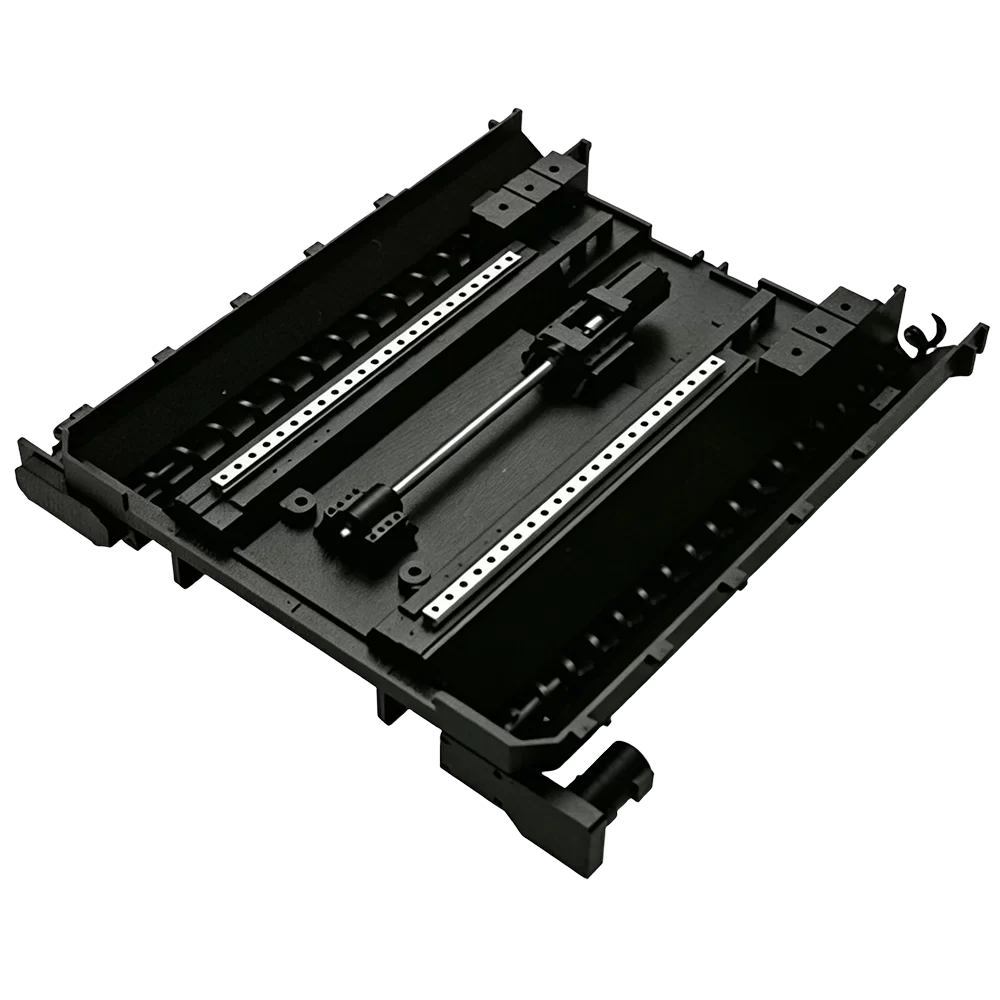
Damping: the quiet advantage
Grey cast iron contains graphite in flake form. Those flakes interrupt the metal matrix, and when the structure flexes, energy is dissipated at the flake boundaries instead of being returned. The practical effect is that a cast iron bed quiets a vibration in a few cycles where a steel fabrication would keep ringing for many.
This is why cast iron survives in machine tools despite being weaker and heavier than steel. Stiffness can be designed in by adding material or ribs; damping cannot be designed in easily once the structure is built. A steel fabrication must be filled with a damping material, or heavily ribbed with constrained layers, to approach what cast iron does by nature.
The consequence for a buyer is visible in the part, not the brochure. A well-damped machine holds a good finish on an interrupted cut — milling across a slot, turning an interrupted surface, boring a port — where a ringing machine leaves a pattern the operator cannot remove by slowing down.
Thermal stability and why beds are aged
A casting arrives from the foundry with internal stresses locked into it. Machine it immediately and those stresses redistribute as material is removed, so the bed moves after the final cut. That is why castings are not machined straight from the mould.
- Stress relief by controlled heating and slow cooling lets the casting relax before rough machining.
- Natural aging leaves the casting outdoors for months, which lets residual stress work itself out slowly at ambient temperature.
- Rough machine, then finish with a second relaxation interval between the two, so the finishing cuts remove the least possible material from a stable structure.
Thermal stability is also about expansion. Cast iron expands less than steel for the same temperature rise, so a bed in cast iron moves less when the workshop warms up. Combined with the machine’s thermal design — symmetric structure, coolant management, warm-up routine — that is what keeps a machine inside tolerance from the first part of the shift to the last.
The guideway is part of any cast iron machine bed
The bed and its guideways are one system, and the way surface is where the bed’s qualities are either used or wasted.
| Integral cast ways | Machined directly into the casting. Maximum damping and stiffness, and the ways move with the bed as one piece. |
|---|---|
| Hardened and ground ways | Flame or induction hardened, then ground. Wear resistance for heavy use, with the damping of the casting retained. |
| Linear guideways | Bolted rails and recirculating carriages. Low friction, easy replacement, less damping than sliding ways. |
| Box ways | Large sliding contact area. High damping and load capacity, but more friction and a greater risk of stick-slip at fine feeds. |
Whether cast iron or linear guideways suit a given machine is a separate decision, and the trade-offs are set out in box way versus linear guideway. What matters here is that the bed is the part that carries whichever guideway is chosen.
What to write into the enquiry
The work
- Part size, mass and the heaviest cut the machine will take
- Whether the process involves interrupted cuts, cast surfaces or hard material
- The surface finish and tolerance the part must hold
- Whether the machine runs one shift or continuously
The structure
- Bed material and whether the casting is stress-relieved and aged
- Guideway type, hardness and how the ways are lubricated
- Machine mass, and the foundation it requires
- Thermal design: symmetry, coolant handling and the recommended warm-up time
Why the bed is the last thing you can change
Buyers often plan to upgrade a machine later: add a bigger chuck, add a fourth axis, add a taller column. Most of those upgrades are possible. Changing the structural behaviour of the bed is not, and it is worth knowing why before the specification is signed.
Damping cannot be retrofitted. You can bolt on a bigger motor or a longer rail. You cannot add graphite flakes to a casting after the fact, and you cannot easily add mass and damping to a frame that was designed light. If the machine chatters on interrupted cuts at delivery, it will still chatter after the options are fitted.
Rib layout is fixed at the pattern. The internal ribs of a cast iron machine bed are decided when the pattern is made. They set the stiffness in bending and torsion, and they are invisible in the finished machine. A buyer comparing two machines by external appearance is comparing the parts of the design that matter least.
Geometry depends on the bed for life. Every guideway, every mounting face and every alignment is referenced to the bed. When the bed moves, everything moves. That is why stress relief and aging are done before machining rather than after, and why a cheap casting is expensive later.
Mass is not the same as stiffness. A heavy cast iron machine bed resists shock because of its mass, but mass alone does not stop deflection. The rib layout decides where that mass does useful work. Two beds of the same weight can differ substantially in torsional stiffness, and the difference shows up as a machine that twists under an off-centre cut.
Foundation and bed are one decision. The bed distributes load into the floor, and the floor returns the favour by holding the bed straight. A machine placed on an inadequate slab will lose geometry no matter how good the casting is, and no amount of re-levelling cures a floor that deflects under load.
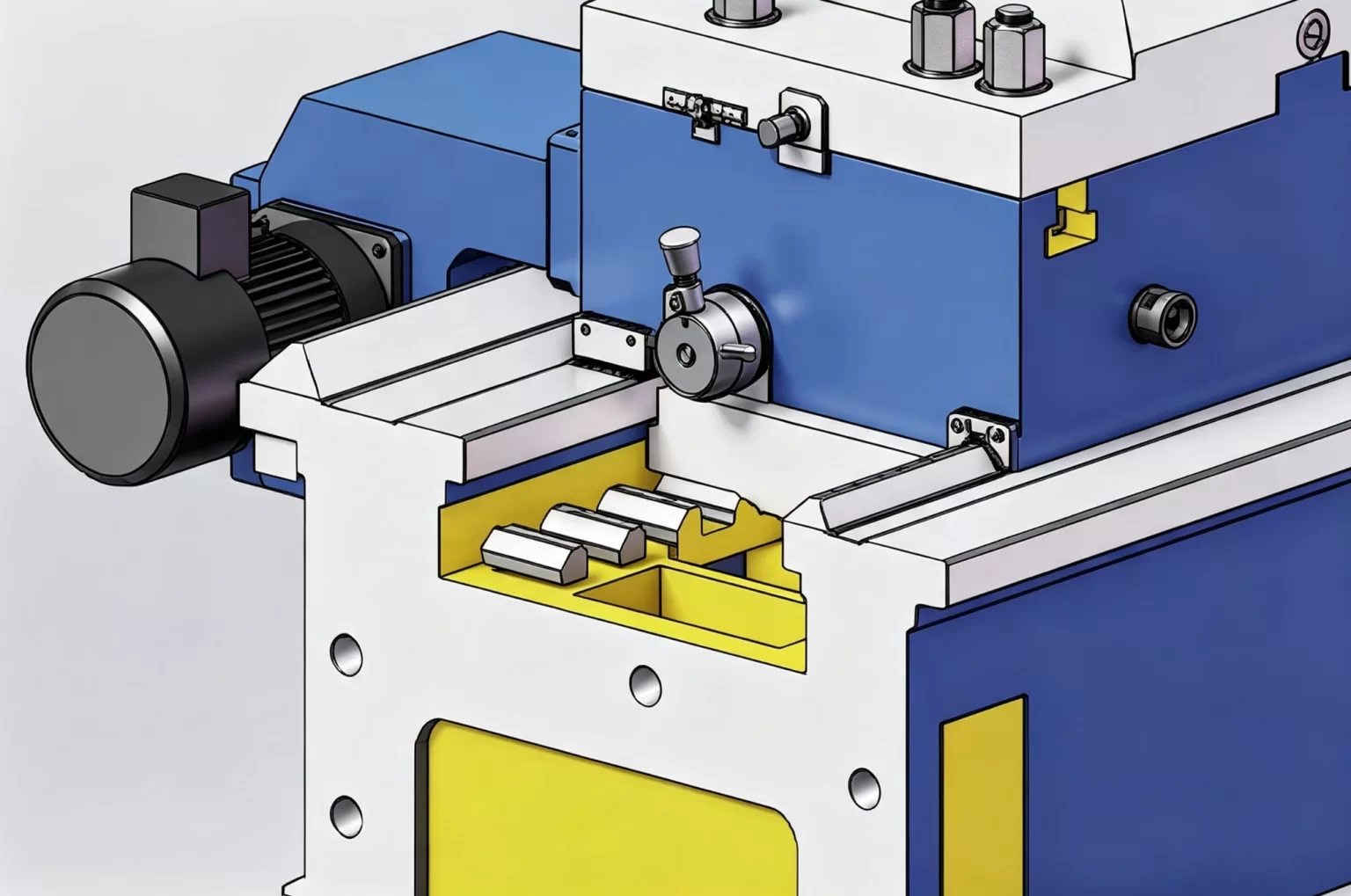
There is also a maintenance dimension, and it starts at commissioning rather than after the first problem appears. A cast iron machine bed holds its geometry only while the ways on it are protected: lubrication that reaches the sliding surface, wipers that keep chips out, and a level check after any move or foundation change. Neglect those and the bed is blamed for a problem caused by dry ways, which is the most common unfair verdict in machine tool maintenance.
The practical consequence for a buyer is to ask structural questions early, while the specification is still open. Bed material, rib design, casting mass, whether the casting was stress-relieved and aged, and what foundation the machine needs are all fixed before delivery. Everything else on the option list can wait.
Frequently asked questions
Is cast iron better than steel for a machine bed?
For damping and thermal stability, generally yes. For stiffness per kilogram and for complex shapes, welded steel is better. The right answer depends on whether the machine’s limiting behaviour is deflection or vibration.
Why is my machine heavier than a competitor’s at the same size?
Often because the bed is a casting with more mass in the structure. Extra mass is not waste in a machine tool: it lowers the natural frequency and absorbs shock. Ask for the mass and the rib design rather than assuming lighter is better.
Does casting age really matter?
Yes, for long-term geometry. A casting that was not aged may move over the first years of service, and the movement shows up as a machine that needs re-levelling and re-aligning sooner than expected.
Can a welded frame be damped well enough?
Yes, with filling, constrained-layer damping or a polymer concrete core. It is a design and cost decision rather than an impossibility, but it is rarely cheaper than a casting at production volumes.
What should I check on the foundation?
Level, flatness and the absence of a soft spot under any corner. A bed is only as straight as the floor it stands on, and a foundation problem appears as geometry error that comes and goes.
Tell us what the machine has to resist
Send the part size, the heaviest cut and the finish you must hold, and say whether the process involves interrupted cutting. We will tell you how the machine structure is built for it — bed material, rib design, guideway type and the warm-up routine that goes with the machine.
Describe your cuttingSee how we build machines
WhatsApp +86 15502628547 · info@dhlathe.com
For any cast iron machine bed decision, ask whether the casting was stress-relieved and aged. It decides how long the geometry lasts.
