
Machine Comparison
The gear hobbing machine versus gear shaping machine choice is settled by geometry before it is settled by price. Hobbing rolls a rotating hob through the tooth space and is the fast route for external gears with room at both ends. Shaping drives a reciprocating cutter through the space and is the only cutting route to internal teeth and to teeth trapped against a shoulder. In our range the YK31 series is the hobbing family and the YK51 series the shaping family, so the question is less "which series" than "which tooth" — and then, for the chosen process, which size and which workholding.
The gear hobbing machine vs gear shaping machine comparison
In the gear hobbing machine vs gear shaping machine comparison, both are gear cutting machines with a CNC control and a workholding axis that rotates the blank in step with the cutter. The difference is the cutter and the motion it makes.
| Behaviour | Hobbing machine (YK31 family) | Shaping machine (YK51 family) |
|---|---|---|
| Cutting motion | Hob rotates; continuous generating roll | Cutter reciprocates; generating roll in step |
| Cutter | Hob on an arbor, often with a swivel head for helix angles | Cutter on a reciprocating spindle, guided in a slide |
| Internal teeth | Not possible | Yes — the main reason the machine exists |
| Close shoulder | Limited by hob diameter and run-out | Reaches in with a narrow cutter |
| Cycle time | Fastest for external gears | Slower, tooth by tooth |
| Workholding | Arbor between centres, or a fixture for large rings | Table-mounted fixture, cutter above the work |
| Typical addition | Hob swivel, tailstock, steady for long shafts | Stroke adjustment, cutter guide, internal attachment |
When the YK31 hobbing route wins
If the gear is external and has clearance at both ends, hobbing is faster and usually cheaper per piece. The hob cuts continuously, so the whole face width is generated in one pass, and a single hob covers a range of tooth counts for a given module. For shafts with an integral gear, the arbor between centres holds the part on its own axis, which is exactly the datum the gear needs.
Hobbing also handles helical gears cleanly: the hob slide swings to the helix angle and the same machine cuts spur and helical work. For a shop making gear shafts, sprocket blanks or replacement gears in modest batches, a hobbing machine is the general-purpose answer and the shaping machine is the exception.
What it will not do is reach inside. If the drawing shows internal teeth, or a gear shoulder so close that the hob cannot run out, hobbing is not a compromise — it is impossible, and no amount of fixturing changes that.
When the YK51 shaping route wins
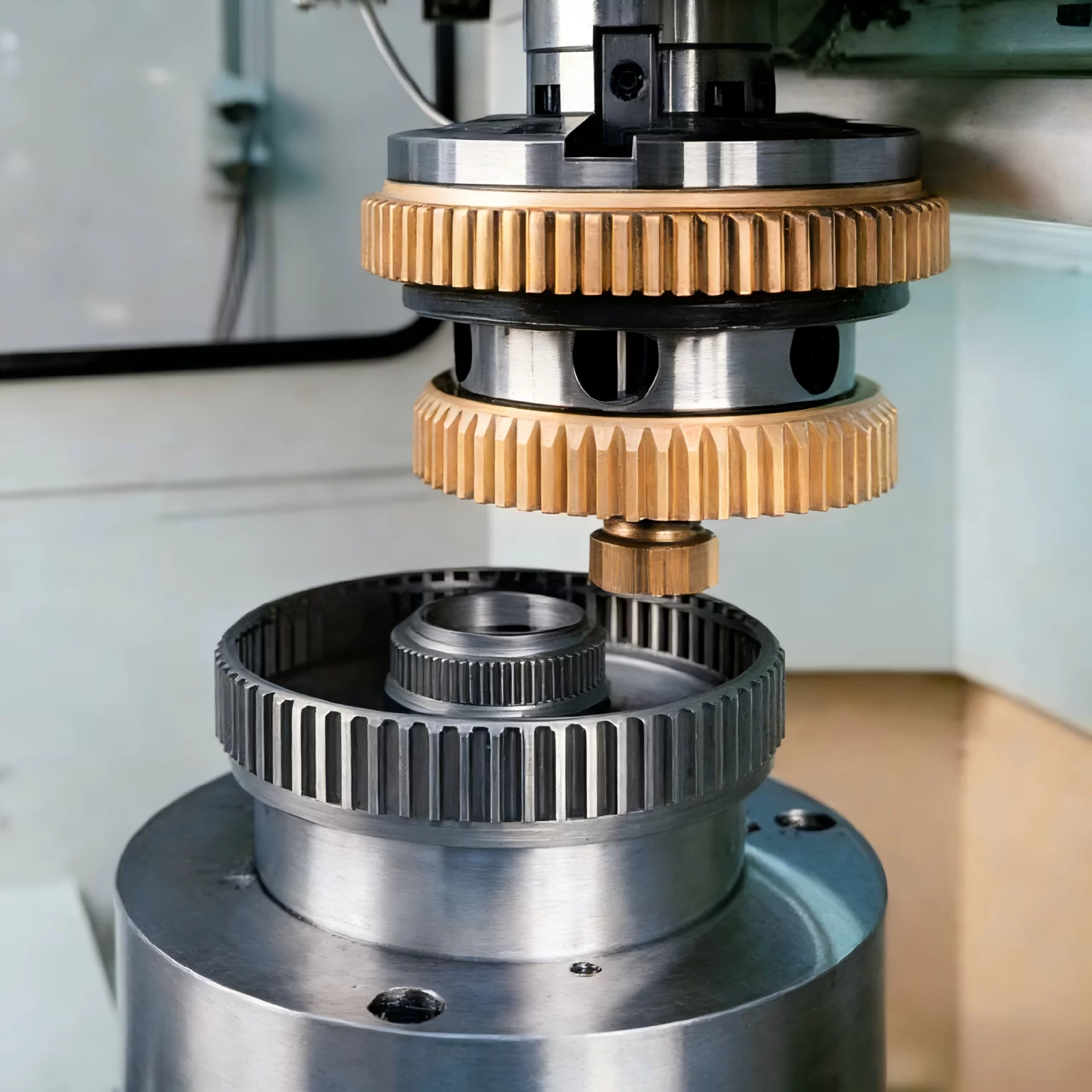
Shaping earns its place on the parts hobbing cannot touch. An internal gear, a gear cluster with teeth between two shoulders, or a gear that must run up to a face without a run-out groove all need a cutter that enters the tooth space from the end. That is what the reciprocating cutter does.
It is also the better choice when the gear is large and thin, because the part sits on a table and the cutter comes down to it, rather than the part being held on an arbor that has to be stiff enough for the cut. For ring gears and internal splines, that workholding advantage is often as important as the geometry.
The cost is cycle time and cutter wear. Each tooth space is a sequence of strokes, and the cutter wears on its flanks, so the same gear takes longer and the tooling bill per piece is higher. Where hobbing can do the job, it usually should.
When you need both
A gear shop that makes gearboxes, reducers or custom transmission parts usually ends up with both machines, because the product mix contains external shafts and internal ring gears. The decision then becomes one of sequence: which machine to buy first, and how to size it.
The usual answer is to buy the hobbing machine first, because it covers the larger share of the work, and to outsource internal gears until the volume justifies the shaping machine. If internal work is the reason the shop exists, that order reverses.
The drawing decides, not the catalogue
Before comparing models, mark on the drawing whether the teeth are internal or external and how much clearance exists at each end of the tooth. Those two facts eliminate one of the two machine families outright, and no specification comparison can override them.
Sizing the machine you choose
Once the family is fixed, five numbers set the model.
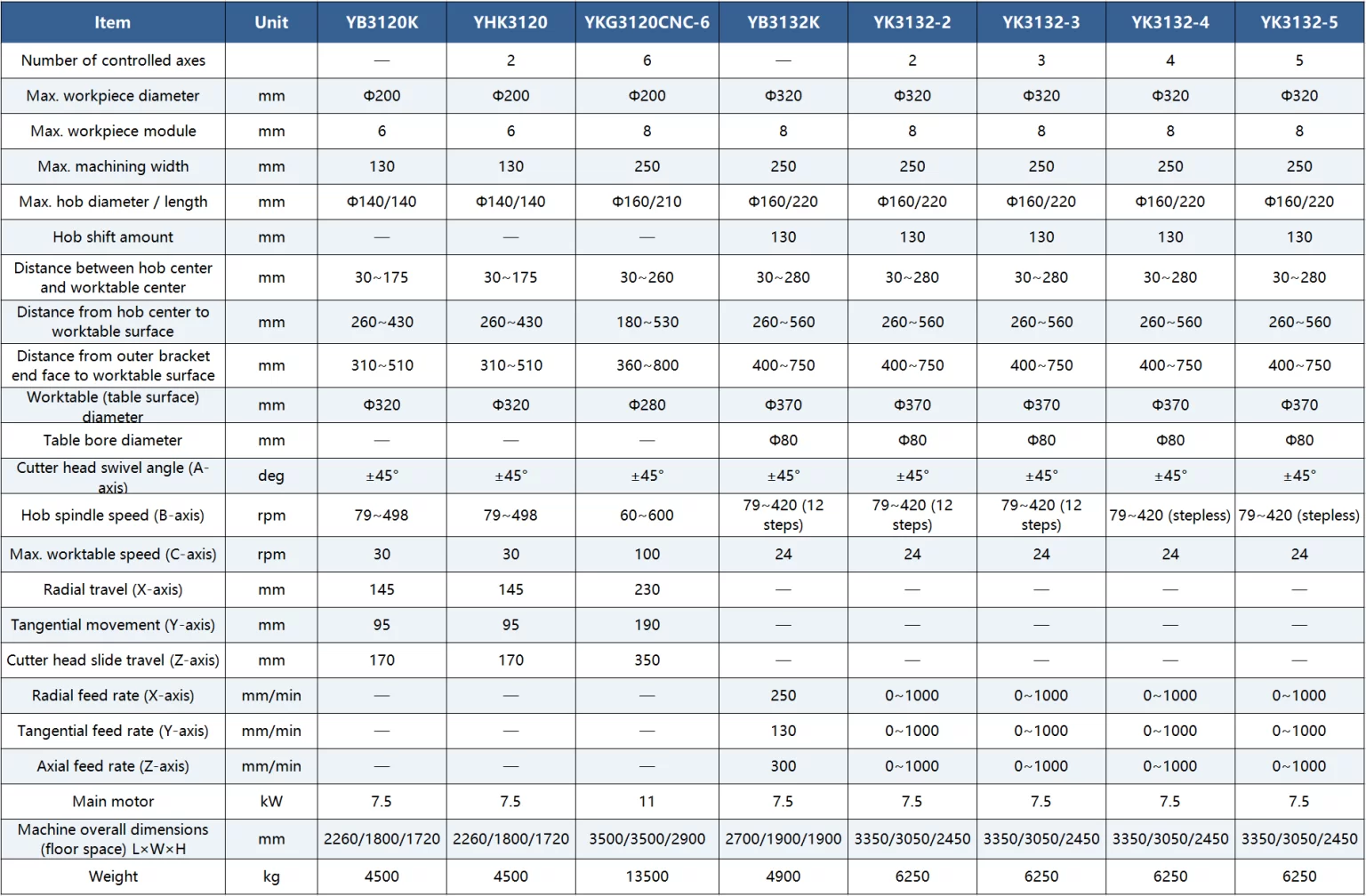
- Maximum module. The coarsest tooth you will cut, which sets the machine’s rigidity and the cutter size.
- Maximum workpiece diameter. For hobbing, the diameter that swings over the bed or fits the arbor; for shaping, the table capacity and the cutter clearance.
- Face width and stroke. On a shaping machine the stroke length must cover the face width plus clearance; on a hobbing machine the axial travel must cover it.
- Helix angle range. The swivel range of the hob head decides whether you can cut the helix angles on your drawings.
- Workholding. Arbor, tailstock and steady for shafts; table fixtures and internal attachments for rings.
The process comparison behind this choice is set out in hobbing, shaping and grinding compared, and the full range is on the gear machine page.
What to write into the enquiry
The gear
- Module, tooth count, pressure angle and helix angle
- Internal or external, with the clearance at each end of the tooth
- Maximum outside diameter and face width
- Accuracy grade, material and heat treatment
The machine
- Whether internal teeth must be cut, and the largest internal diameter
- Hob arbor or cutter spindle size, and the tooling supplied
- Helix angle range and the axes provided
- Workholding: arbor and tailstock, or table fixture and steady
Workholding and cutter reach decide the model
Once the family is fixed, the differences between two models of the same family usually come down to how the part is held and how far the cutter can reach — not to the control.
Holding a shaft. A gear shaft wants an arbor between centres with a tailstock, so the gear is cut on the same axis that will later be its bearing journals. That workholding is what makes the gear concentric, and it is worth specifying explicitly rather than assuming it is included.
Holding a ring. A large ring or an internal gear sits on a table fixture and is clamped on a face that will not be machined afterwards. The fixture, not the machine, decides the runout, which is why a shaping machine with a generous table is often chosen for ring work.
Cutter reach. On a shaping machine the stroke length and the cutter guide set how deep the cutter can go and how close to a shoulder it can work. On a hobbing machine the hob diameter and the swivel range set the helix angles you can cut and how close to a shoulder the hob can run out.
| Shaft work | Arbor between centres, tailstock and steady, with the gear cut on the bearing axis |
|---|---|
| Ring and internal work | Table fixture, clamping on a non-machined face, cutter reach past the shoulder |
| Helix angles | Hob head swivel range, stated in degrees, covering every drawing you will run |
| Stroke and clearance | Face width plus run-out clearance, on both machine types |
One practical note closes the gear hobbing machine vs gear shaping machine comparison. The two machines are usually bought years apart, and the second one is chosen by whoever is running the shop at that time. Write down why the first machine was chosen — which tooth, which clearance, which batch size — and keep it with the machine file. When the internal work appears, the gear hobbing machine vs gear shaping machine decision can then be made from evidence rather than from memory.
It also helps to keep the tooling with the machine: hobs for the hobbing range, cutters and guides for the shaping range, each labelled with the module and the tooth range it covers. Tooling that has drifted between machines is the most common reason a changeover takes an hour longer than it should.
Frequently asked questions
Is YK31 a hobbing machine and YK51 a shaping machine?
The gear hobbing machine vs gear shaping machine question is answered by the series before the model: in our range the YK31 series is the gear hobbing family and the YK51 series the gear shaping family. Model numbers within each series denote size and configuration, so the series tells you the process and the model tells you the capacity.
Can a shaping machine cut external gears too?
Yes, and it does so accurately, just more slowly than a hob. If a shop has a shaping machine for internal work, it can cover external gears as well, which is why some buyers start there.
Which machine is easier to set up?
Hobbing is usually quicker for a repeated external gear because the arbor and the hob stay in place and the changeover is the blank and the program. Shaping needs the cutter positioned relative to the work and the stroke set, which takes longer per changeover.
Do I need a grinding machine as well?
Only if the gear is hardened and the accuracy grade requires correction after treatment. That decision is separate from hobbing versus shaping, and it is covered in the process comparison linked above.
What is the smallest batch that justifies a shaping machine?
There is no fixed number, because the justification is usually capability rather than volume: if you cannot cut internal teeth at all, any internal work justifies the machine. If the work is external, the hobbing machine will almost always be the better investment.
Send the gear drawing, and we will tell you which family
Send module, tooth count, helix angle, internal or external, and the clearance at each end of the tooth. We will tell you whether the job belongs on a YK31 hobbing machine or a YK51 shaping machine, and what size covers your range.
Send your gear dataSee the gear range
WhatsApp +86 15502628547 · info@dhlathe.com
For the gear hobbing machine vs gear shaping machine choice, state whether the teeth are internal. It eliminates one machine family before any price is discussed.
