
Technical Guide
If you are asking what is CNC turning in one line: it is a machining process in which the workpiece rotates and a stationary single-point tool is fed into it along controlled axes. The rotation provides the cutting speed; the tool feed provides the shape. Numerically controlled slides move the tool along X and Z, so a program rather than a handwheel decides the diameter, the length and the profile. Almost every round part begins this way: shafts, bushings, flanges, piston rods, valve bodies and the turned blanks that later go to a milling machine. If the finished part is a surface of revolution around one axis, it is a turning job.
What actually happens at the cut
To answer what is CNC turning properly, it helps to look at the cut itself. Three things happen at once, and understanding them explains almost every turning decision.
The work rotates. Surface speed is what the cutting edge actually sees, and it is set by the diameter: a large diameter needs a low spindle speed to reach the same surface speed as a small one. That is why a program ramps the spindle up as the tool moves toward the centre on a facing pass.
The tool moves. Feed is the distance the tool advances per revolution, and it sets the thickness of the chip and the finish left behind. A fine feed leaves a smoother surface but takes longer; a coarse feed removes material faster and leaves visible feed marks.
The geometry follows. The tool nose travels a path, and the part takes the shape of that path. A straight path parallel to the axis turns a cylinder; a path at an angle cuts a taper; a circular interpolation cuts a radius or a ball.
The one sentence version
Turning is a rotating workpiece plus a single-point tool on a programmed path. Everything else — the machine size, the tooling, the tolerance — is a consequence of that arrangement.
The four parts of a CNC lathe
| Part | What it does | What to check when buying |
|---|---|---|
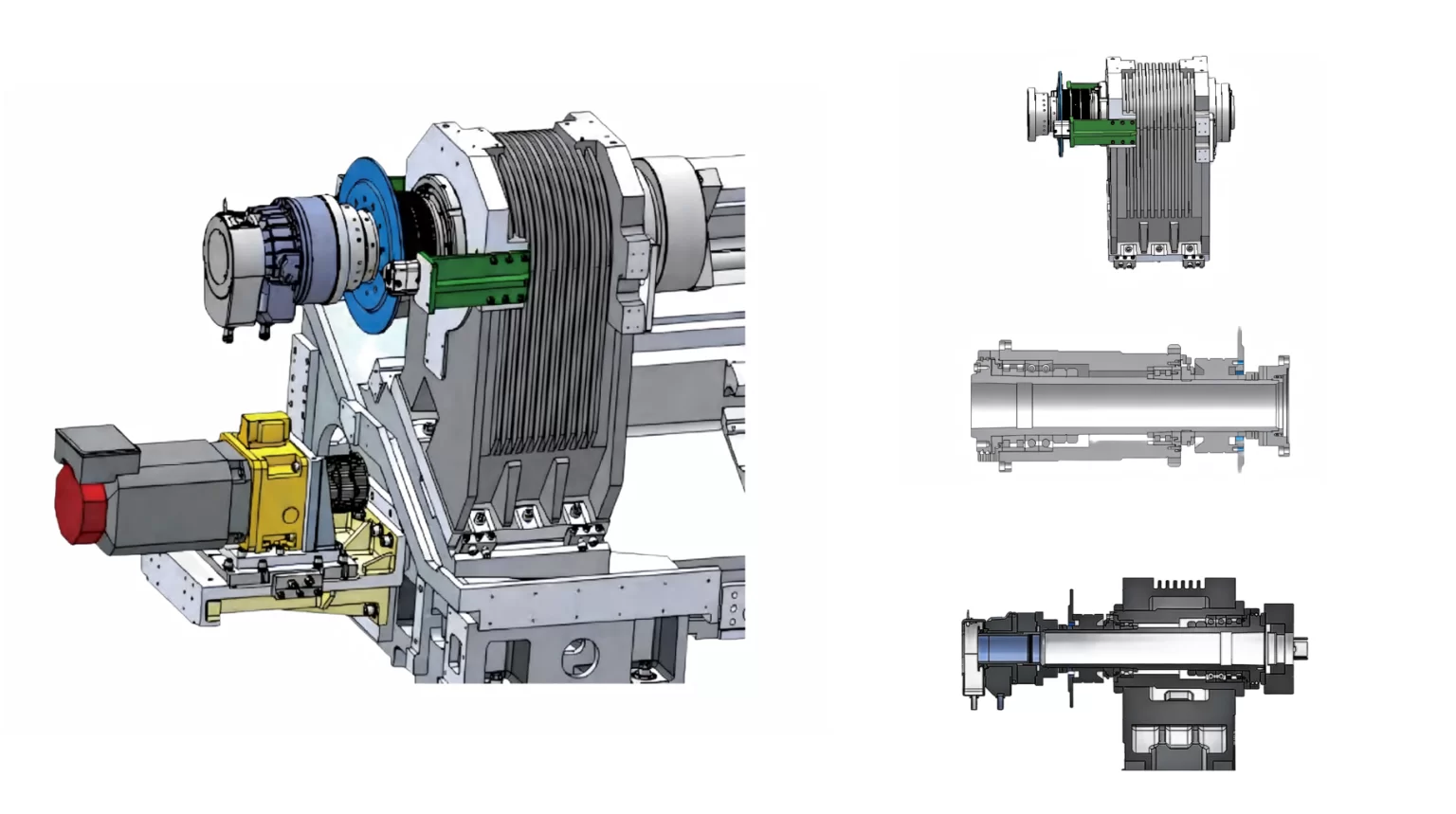
| Spindle and chuck | Rotates the work and holds it | Spindle bore, maximum speed, chuck size, torque at low speed |
| Bed and guideways | Carry the slides and set the geometry | Cast iron or linear guide, hardened ways, slant or flat layout |
| Turret | Holds the tools and indexes them into position | Number of stations, boring bar capacity, indexing time, live tooling |
| Tailstock | Supports long parts at the free end | Quill travel, thrust, whether it is programmable or manual |
The control is the fifth element, and it is the one buyers over-weight. Anyone asking what is CNC turning usually expects the control to be the answer; the mechanical items above set the ceiling, and the control only decides how easily that ceiling is reached. A modern control does not make a weak machine accurate; it only makes the weak machine easier to program. The mechanical items above set the ceiling.
The operations a turning program performs
Facing squares the end of the part and establishes the length datum. It is usually the first operation, because every later dimension is measured from that face.
Rough turning removes the bulk of the material in a few heavy passes, leaving a small allowance on the diameter. Roughing is judged on metal removal rate, not on finish.
Finish turning takes the last light passes to size, using a higher surface speed and a finer feed. This is the pass that decides the measured diameter and the visible finish.
Boring opens and sizes an existing hole with a single-point bar. It is used when the hole must be true to the turned outside diameter, which a drill cannot guarantee.
Grooving and threading cut features that are not simple cylinders: undercuts, O-ring grooves, relief grooves and threads. Threading is a coordinated motion in which the spindle and the feed are locked, which is why thread pitch is a program parameter rather than a hand setting.
Parting off separates the finished part from the bar. It is the most demanding operation on the list, because the tool is buried in a narrow slot with poor chip clearance; a worn parting tool or the wrong feed shows up immediately as chatter or a broken insert.
What turning cannot do
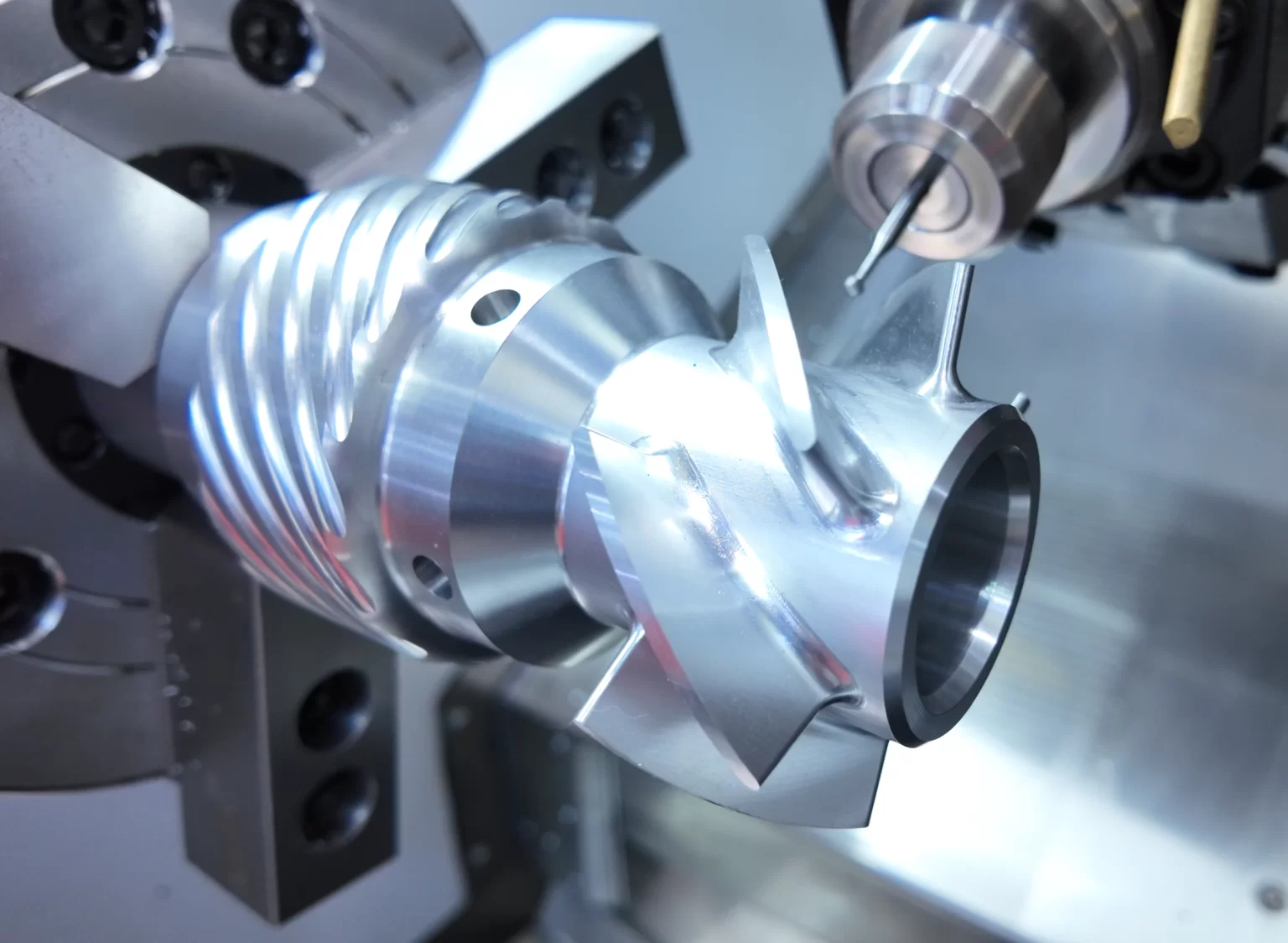
Prismatic features. A square pocket, a slot with flat sides or a hexagonal flats pair cannot be produced by a single-point tool on a rotating part. A milling machine, or a lathe with live tooling and a C axis, is required.
Holes off the axis. A cross-drilled hole, a bolt circle or an angled port sits away from the centreline, so the tool cannot reach it by feeding along X and Z. Again: live tooling, or a second operation.
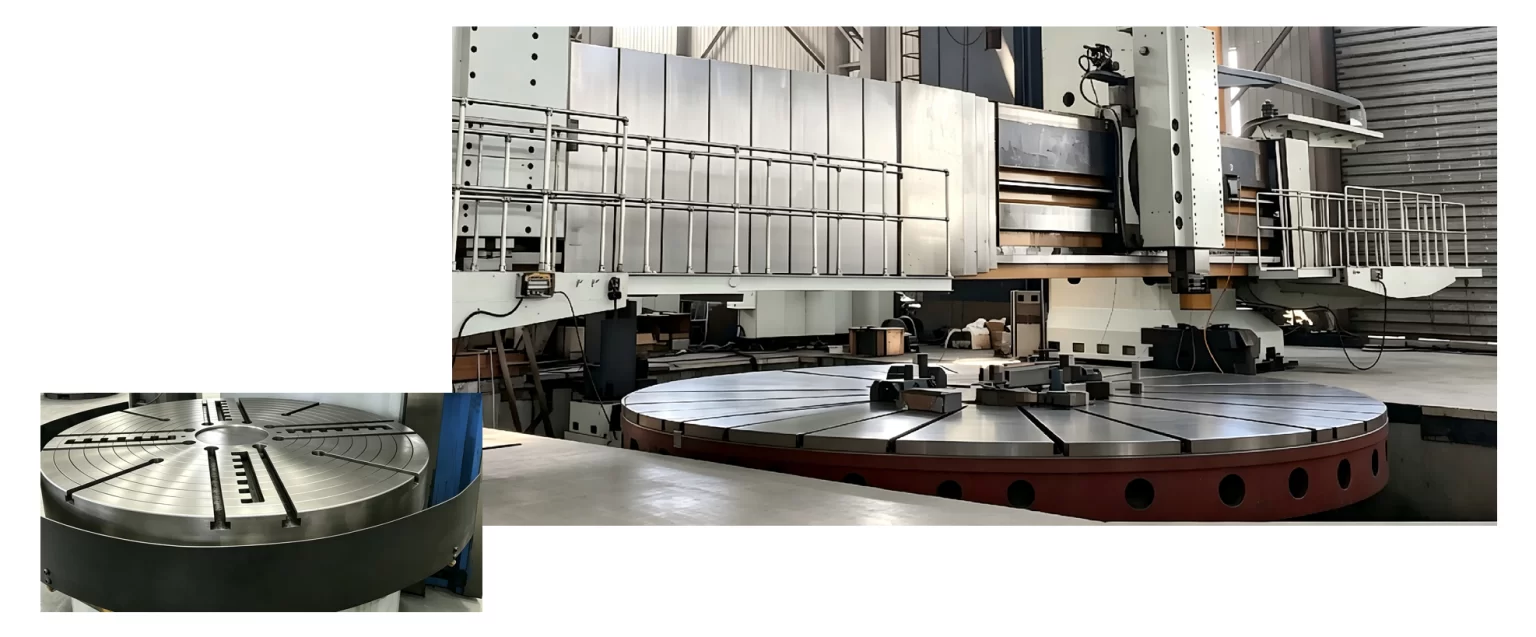
Large flat faces. A face that must be flat across a wide area is a milling job; turning produces a face that is perpendicular to the axis but generated by a rotating part, which is efficient only while the diameter is moderate.
This is why most real parts are turned first and milled second. Turning establishes the axis and the primary diameters; milling adds the features that are not surfaces of revolution. Knowing which operations belong to which machine is what makes a quote comparable between suppliers.
What decides the tolerance you get
A turning machine does not hold a tolerance because the control is precise; it holds it because five things are under control.
- Machine geometry. Spindle runout, guideway straightness and the squareness between axes set the floor. No program can correct them.
- Tool and insert. A worn insert cuts oversize and leaves a poor finish. Tool nose radius also changes the profile actually produced at a corner.
- Workholding. Chuck pressure distorts thin parts. A thin ring gripped hard becomes a triangle while it is being cut and springs back round when released.
- Thermal state. A cold machine and a machine that has run for two hours are not the same machine. A warm-up routine is part of holding size, not a formality.
- Measurement. A part measured hot reads differently from the same part measured at room temperature. For close work, let it cool before the final check.
The practical consequence is that tolerance is a system result. If a drawing calls for a tight diameter, the question is not only which machine, but which chuck, which insert, which coolant and how the part is measured afterwards.
What to send in an enquiry
The part
- Drawing with the turned diameters, lengths, threads and grooves dimensioned
- The largest diameter and the overall length, plus the mass of the blank
- Tolerances that actually matter, and which surface each one applies to
- Material and condition — bar, forging, casting, or pre-hardened
The process
- Whether the part needs milling, cross-drilling or a second operation
- Annual quantity and batch size, which decide bar feed versus chuck work
- Surface finish requirement and any heat treatment after machining
- Whether the part is measured on the machine or on a separate gauge
Where turning sits in the production route
A part is rarely made on one machine, so it is worth knowing where turning fits before quoting. The answer to what is CNC turning, in production terms, is usually "the first operation that establishes the axis".
Blank first. A turned part starts as bar stock, a forging or a casting. Bar is used for parts up to the spindle bore and is fed automatically; a casting is used when the shape is close enough that machining only removes a skin. The blank choice decides how much material the turning program has to remove, and therefore how much time the part spends on the machine.
Turn the axis, then mill the features. Turning establishes the outside diameter, the end faces and the bore — the surfaces that define the axis. Everything that is not a surface of revolution moves to a milling operation afterwards. Keeping the turned surfaces concentric in one setup is the reason turning comes first.
Then treat, then finish. If the part is hardened, the tight diameters come back for grinding or hard turning after treatment, because heat treatment moves them. A drawing that ignores this sequence tends to specify a tolerance that the first operation cannot hold and the last operation was never asked for.
Then measure. A turned part is checked for diameter, length, runout and thread gauging. The measuring method belongs in the process plan, because a part that is correct on the machine and wrong on the surface plate has not been made correctly.
Read that way, turning is not a standalone process but the operation that fixes the datum every later step refers to. That is why a turning shop asked to quote a finished part will usually quote the turning, the milling and the treatment separately: the three have different failure modes and different inspection needs.
Frequently asked questions
Is CNC turning the same as turning?
The cutting action is the same; the difference is control. On a CNC lathe the tool path comes from a program, so complex profiles, threads and radii are repeatable without a skilled hand on a wheel. Manual turning still exists for one-offs and repair work.
What is the difference between turning and boring?
Turning reduces the outside diameter; boring enlarges and trues an existing internal hole. Both use a single-point tool on a rotating part, which is why they are often done in the same setup.
Can a CNC lathe cut threads?
Yes. Threading is a coordinated motion between spindle rotation and tool feed, so the pitch is programmed and the result is repeatable. Internal and external threads are both routine, including tapered threads with the right tool and cycle.
Why do turned parts sometimes come out oval?
Usually workholding, not the machine. A thin wall gripped by a three-jaw chuck deforms under clamping pressure, is cut in that deformed state, and springs back when released. Reducing clamping force, using soft jaws or a support ring is the fix.
Do I need live tooling?
Only if the part has features that are not surfaces of revolution and you want them done in one setup. Live tooling with a C axis turns a lathe into a turn-mill machine, which removes a second operation but adds cost and programming complexity.
Send the drawing, and we will tell you how it turns
Send one representative part with its turned diameters, threads and tolerances marked, plus the material and annual quantity. We will tell you which CNC lathe size covers it, whether it needs live tooling, and what workholding the thin sections will require.
Send your part dataSee the lathe range
WhatsApp +86 15502628547 · info@dhlathe.com
For any what is CNC turning question, the practical test is which surfaces revolve around one axis. Mark which diameters carry tolerance. That single answer decides the machine, the chuck and the measuring method.
