
Buying Guides
A machine tool quotation is a scope document with a number attached, and the number is only meaningful once the scope is read. Six cost lines are routinely left out or left vague: packing and crating, the freight boundary set by the delivery term, tooling and workholding, installation and commissioning, spare parts and documentation, and the conformity work your market requires. Two quotations that differ by a wide margin are almost never quoting the same machine — they are quoting different scopes. Reading for those six lines is what makes an offer comparable.
Why a machine tool quotation is not a price
A machine tool is sold as a configuration, so the offer is a list of what is included rather than a single figure. That distinction decides how the document should be read. A quotation for a configured machine is a small contract: a base machine, an option list, a workholding solution, a service scope around the installation, a document set and a delivery term. Each of those is a cost line, and each can be moved from the buyer’s side of the table to the seller’s side simply by changing what the sentence says.
The differences are easy to miss because the headline number is the same kind of number on both offers. Two suppliers can both quote a CNC lathe with a bar feeder and a chip conveyor and be quoting machines that differ by a spindle drive, a control series, a chuck, a steady rest and a set of jaws. The cheaper offer is cheaper because it contains less, and the only way to find out how much less is to compare the scope line by line — not the total.
There is also the question of what the quotation is silent about. An offer that does not mention packing may include a wooden case, or may assume you collect the machine from the factory. In a comparison against a deadline, that ambiguity becomes a supplementary invoice after the order is signed.
The number at the bottom is the least informative part
If two machine tool quotations differ by more than the value of the options you can see, the difference is in a cost line you cannot see. Find that line before you negotiate the price, because negotiating a scope you have not compared is negotiating against yourself.
The six cost lines an offer can leave out
The table lists the six lines that most often sit outside the headline figure, what each one actually covers, and the wording that usually gives away how the supplier is treating it.
| # | Cost line | What it covers | Wording that needs a follow-up |
|---|---|---|---|
| 1 | Packing and crating | Case or heavy-lift bracing, rust prevention, moisture protection, lifting marks | “Standard export packing” with no specification attached |
| 2 | Freight, insurance and the delivery boundary | Inland transport, sea freight, insurance, unloading at destination, and where the seller’s responsibility ends | An Incoterm with no named place, or “FOB” used as a synonym for “cheap” |
| 3 | Tooling and workholding | Chuck and jaws, steady rest, tailstock centre, fixtures, tool holders, boring bars, special cutters | “Tooling as required” — required by whom, and on which drawing? |
| 4 | Installation and commissioning | Who attends site, for how many days, travel and accommodation, levelling, alignment, test cut, operator instruction | “Installation available on request” — at what rate, and by whom? |
| 5 | Spare parts and documentation | First-year wear parts, electrical drawings, parameter backup, manuals and their language, part numbering | “Standard documentation” without a list |
| 6 | Conformity and market access | Technical file, declaration of conformity, marking, market-specific registration, translations | Conformity described only as “CE available” |
Read all six before looking at the total. The exercise is not academic: lines 4 and 6 in particular can be a material share of a project budget once travel, testing and documentation work are counted, and neither is naturally included in an offer built around the machine itself.
Packing, crating and the freight boundary
Packing is where a machine is most likely to be damaged and least likely to be specified. “Standard export packing” can mean a braced machine inside a container with a moisture barrier and VCI film, or a machine standing on the container floor with the rust-prevention oil applied at the factory and nothing else. The two are not the same purchase. Ask for the packing specification in writing and for packing photographs before the container is sealed, because a machine that arrives with fretting marks on the guideways is a claim, not a delivery.
The delivery term defines where the seller’s cost ends, and it is the single most misread line in a machine tool quotation. Industry terms are defined in the ICC Incoterms 2020 rules, and they are not interchangeable: an offer quoted ex works leaves you paying inland haulage, export clearance, freight, insurance, destination charges and unloading, all of which are real costs that the machine price does not contain. The same machine quoted as delivered to your site is a different number for a good reason. Always check two things in the offer — the three-letter term, and the named place after it. A term without a place is not a delivery term.
Insurance deserves its own line rather than an assumption. Under some terms the seller insures at a minimum level that may not cover the machine’s full value or your loss of production. Read who insures, for how much, and against which risks, then decide whether you need your own cover.
One question settles the freight line
Ask the supplier to state, in the offer, the exact point at which the machine stops being their responsibility and becomes yours — the named place, not just the term. If the answer is vague, price the gap yourself before you compare totals.
Tooling, workholding, installation and commissioning
Tooling is the line that most often changes a machine’s usefulness rather than its price. A lathe quoted without a steady rest cannot machine a long shaft; one quoted with standard jaws cannot grip the casting you actually make. The offer should name what is included against the operations in your process, not against a general description of the machine. The list to check is short: chuck and jaw type, steady rest, tailstock centre, fixture, turret or magazine tool holders, and any special cutter the process needs. All of it belongs in the offer as separate lines, because that is what makes it comparable with the next one.
Installation and commissioning are separate jobs and both should be priced explicitly. Installation covers rigging the machine into position, levelling and anchoring; commissioning covers the geometry and performance checks, the test cut and the handover. Two questions decide the cost: who attends, and who pays the travel. An offer that describes installation as “available on request” has not quoted it. The same applies to operator instruction — how many days, on which machine, and whether it happens before or after your own parts are released for production.
Where the machine has to be levelled and aligned to a specification before acceptance, that work is not a formality and should be described in the offer rather than left to the site. It involves a defined sequence of measurements, and it interacts directly with the foundation. The process is described in the due diligence checklist for buying a CNC machine from China, which treats installation scope as one of the items to be settled at order stage rather than on delivery day.
Spare parts, documentation and conformity
Spare parts are cheap at order stage and expensive afterwards. The offer should carry a first-year wear parts list with part numbers and prices, and a statement of how long those part numbers stay valid. Omitting the list is the most common false economy in a machine purchase: the items that fail first are also the items that stop your production, and buying them one at a time, on an emergency lead time, costs several times what the same list costs when it is negotiated with the machine. A spare machine tool is a contradiction; a spare parts kit is the practical version of one.
Documentation belongs on the same line. What to require in writing: the operating and maintenance manual in your language, the electrical drawings, the parameter backup, the lubrication schedule, the component list identifying the control, drives and bearings fitted, and the geometry and performance test report for the machine supplied. These are not administrative extras; without the parameter backup and the drawings, every future fault is a slower conversation.
Conformity is the last of the six and the one most often discovered late. Machinery placed on the EU market, for example, falls under the CE marking regime, which requires a technical file and a declaration of conformity before the machine is placed on the market. If your offer says only that conformity is “available”, ask which document, for which market, at whose cost, and by which date. A machine blocked at the port for documentation is a delivery delay that no price negotiation will recover.
How to compare two quotations properly
Comparison has a method, and the method is what stops a negotiation from becoming an argument about totals. Put every offer on the same page before you discuss price.
| Fix the specification first | One requirement document, sent to every supplier, with the same option list and the same acceptance scope. Anything not answered is marked as unanswered rather than assumed |
|---|---|
| Restate every offer | Rebuild each offer into one common format: base machine, options, tooling, packing, freight term with named place, installation, documentation, spares, conformity |
| Price the gaps | For each blank line, put your own estimate in and mark it. The offer with the smallest total is frequently not the one with the lowest price |
| Separate the negotiable | Decide which lines you want to negotiate: usually freight terms, spares included, and the scope of installation. Options you need are not negotiable; they are the machine |
| Check the validity and the currency | Note the offer validity and the currency. A short validity with a currency clause transfers the risk of the delay to you |
| Cross-check the payment schedule | Milestones should match physical progress: material, build, test, shipment. Terms that do not line up with the build are covered in what normal payment terms look like |
This is also the point where the requirement document pays for itself. Offers built on a specified requirement can be compared line by line; offers built on a description cannot. If the enquiry was written properly in the first place — the process is set out in how to write a machine tool RFQ — then comparing the answers is mechanical rather than interpretive.
The questions to send back with the offer
Send these as a numbered list against the quotation, and ask for answers in the same numbering. A supplier who answers them properly is also demonstrating how they will answer questions after the order.
About the machine
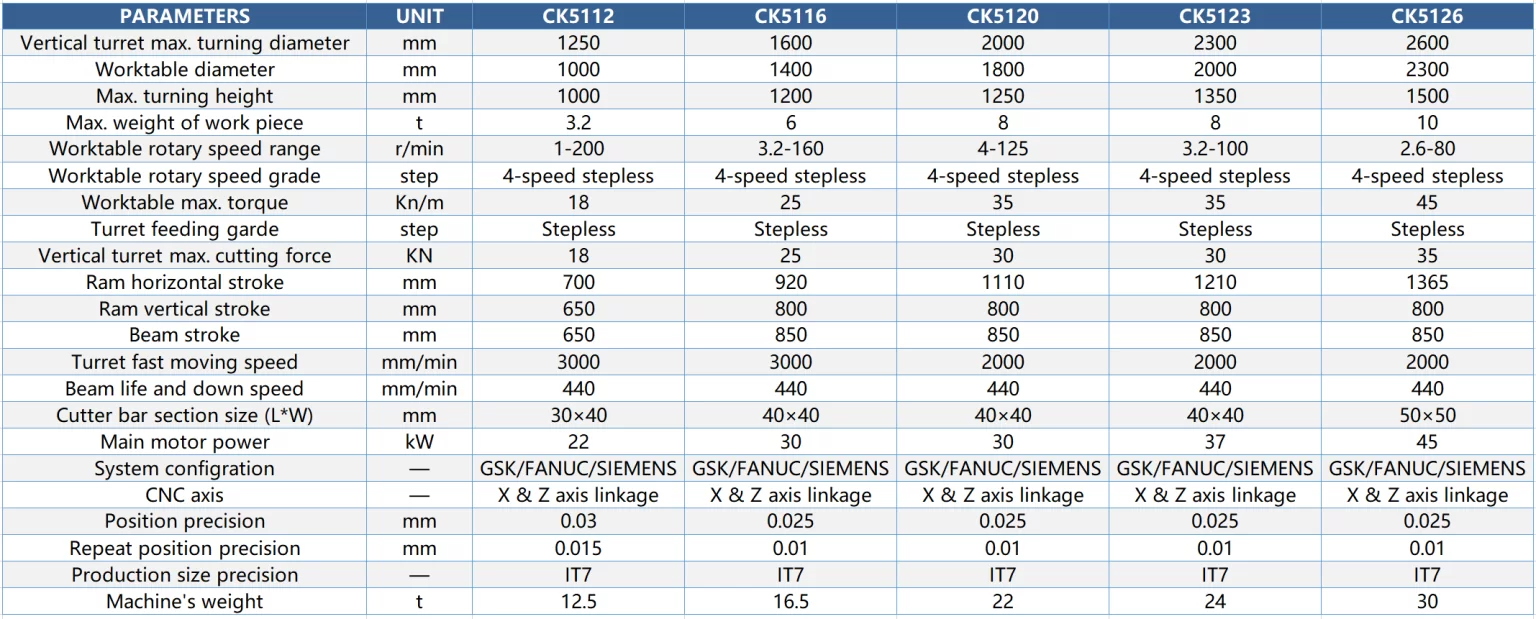
- Which model and configuration is quoted, and can it be matched to a published parameter table?
- Which options are included, and which are available at extra cost?
- What is the spindle, control and workholding specification behind that model number?
- What is excluded from the machine scope that a comparable offer includes?
About the delivery
- What is the packing specification, and will packing photographs be supplied before shipment?
- What is the full delivery term, including the named place where responsibility transfers?
- Who insures the machine during transit, for what value, and against which risks?
- What is the offer validity, the currency, and what happens to the price if the order is delayed?
About everything after the machine
- What exactly does installation cover, who attends, and who pays travel and accommodation?
- Is commissioning included, and what acceptance record is issued at handover?
- Which document set is supplied, and in which language?
- What first-year spare parts are included, and how long do part numbers stay valid?
What to avoid when signing
Signing on a comparable offer
- Every cost line answered in the same format across all the offers you are comparing
- The delivery term written with its named place, and the transit insurance value stated
- Options, tooling and documentation listed as named lines rather than as “standard”
- A machine tool quotation that names the machine, the configuration and the acceptance criteria
Signing on a gap
- A total price with no option list behind it, where the options will be “finalised later”
- A delivery term without a named place, or a verbal promise that it means door delivery
- Tooling described as “as required” against a drawing that has not been exchanged
- Conformity or documentation promised for “after the order”, with no named document or date
The most useful habit is to read a machine tool quotation as a list of exclusions. Every line that is absent is a decision you have been asked to make by default, and the default costs the seller least.
Frequently asked questions
Why are two quotations for the same machine so different?
Because they rarely quote the same machine. The difference is normally in the option list and in the service scope: the control series, the spindle drive, the chuck and jaws, the steady rest, the chip conveyor, the tool presetter, the spare parts kit and the documentation. When two offers are rebuilt into the same format, the gap usually closes to a difference that can be explained by one or two items — and those items are what you then negotiate.
Should installation be included in the machine price?
It should be quoted, whether or not it is bundled. What matters is that the scope is written down: who attends, for how many days, who pays the travel, what is checked, and what record is issued at the end. Installation that is bundled without a scope tends to be shorter on site than installation that was priced, because nobody has committed to a number of days.
How do I check whether freight is really included?
Read the delivery term and the named place together. A term that ends at the factory, the port of loading or the port of discharge leaves you paying the remaining legs, the destination charges and the unloading, and those are real costs rather than formalities. Ask the supplier to state in the offer where the machine stops being their responsibility, and if the answer is not a named place, treat the freight as unpriced.
What documentation should be part of the offer?
Name the documents rather than accepting “standard documentation”: the operating and maintenance manual in your language, the electrical drawings, the parameter backup, the lubrication schedule, the component list identifying the control, drives and bearings, the geometry and performance test report for the machine supplied, and the conformity documents your market requires. Each one is a line in the offer, and each one has a cost if it has to be recreated later.
What should I negotiate first?
The scope, not the price. Get every offer onto the same specification and the same set of included items first, then negotiate on the lines where there is genuine room: the spares package, the delivery term, the installation scope and the payment schedule. Negotiating the price before the scope is settled usually produces a discount on a machine that is smaller, less equipped or less supported than the one you thought you were comparing.
Next step
Send us the requirement, and get an offer you can compare line by line. Send the workpiece, the operations, the volume and the market the machine will be installed in, and our engineering team will return a machine tool quotation structured as separate lines for the machine, the options, the tooling, packing, freight with a named place, installation, documentation, spares and conformity — with every exclusion named rather than left silent.
Request a line-by-line quotation
WhatsApp: +86 15502628547 · Email: info@dhlathe.com
Attach any offer you are already comparing. We will tell you which lines are missing from it, so the comparison with our quotation is like for like.
