
Buying Guides
Choosing a machine tool supplier in China comes down to eight things you can verify rather than take on trust: whether the company builds machines or brokers them, how deep its range really is, which manufacturing steps it performs in-house, who answers your technical questions and in what language, how its quality records are kept, how spare parts are supplied after the warranty, what its export and documentation record looks like, and how transparently it quotes. Price is a ninth variable and the least durable of the nine. The other eight decide whether the machine is still producing five years from now.
Why the machine tool supplier outlasts the price
A machine tool is a fifteen-year relationship sold as a transaction. It arrives in one shipment but consumes spares, technical answers, documentation and calibration for the whole of its working life, and the supplier you choose sets the price of every one of those. A decision made on the purchase price alone accepts unbounded costs after the invoice is paid.
The differences between candidates are also invisible in a quotation. Two offers can carry the same machine description and the same total, while one is backed by a factory that casts and machines its own beds and the other by a company buying finished machines from three unrelated plants.
None of this needs an audit team. It needs eight questions with verifiable answers, asked before the negotiation starts rather than after. Each criterion below can be settled with a document, a video call or a named contact — not with an opinion.
The 8 evaluation criteria
| # | Criterion | What it really tests | How it is settled |
|---|---|---|---|
| 1 | Manufacturer or trading company | Who carries responsibility for build quality, drawings and change control | Business scope, factory address, and who signs the technical agreement |
| 2 | Depth of the product range | Whether the range is an engineered family with continuity, or a set of unrelated models | Series structure, shared components, spares availability for earlier models |
| 3 | In-house manufacturing steps | Which steps the supplier controls, and therefore which claims can be verified on site | Process list from casting to final test, with photographs and a visit |
| 4 | Engineering and application support | Whether technical questions are answered by engineers, and how quickly | A test question by email: send a real drawing and time the answer |
| 5 | Quality system and traceability | Whether quality is recorded or merely asserted | Inspection plan, records from a recent machine, standard test report |
| 6 | Spare parts and support after warranty | The real cost of ownership over fifteen years | Part numbering, wear-part list with lead times, escalation path and named contact |
| 7 | Export execution and documentation | Whether the supplier has shipped to a market like yours before | Packing standard, document set, references to comparable destinations |
| 8 | Commercial transparency | How the supplier behaves when something changes | Quotation structure, payment schedule, change control, warranty wording |
Score the eight in that order. Criteria 1 to 4 decide whether the supplier is technically credible at all; criteria 5 to 8 decide whether the relationship still works in year five.
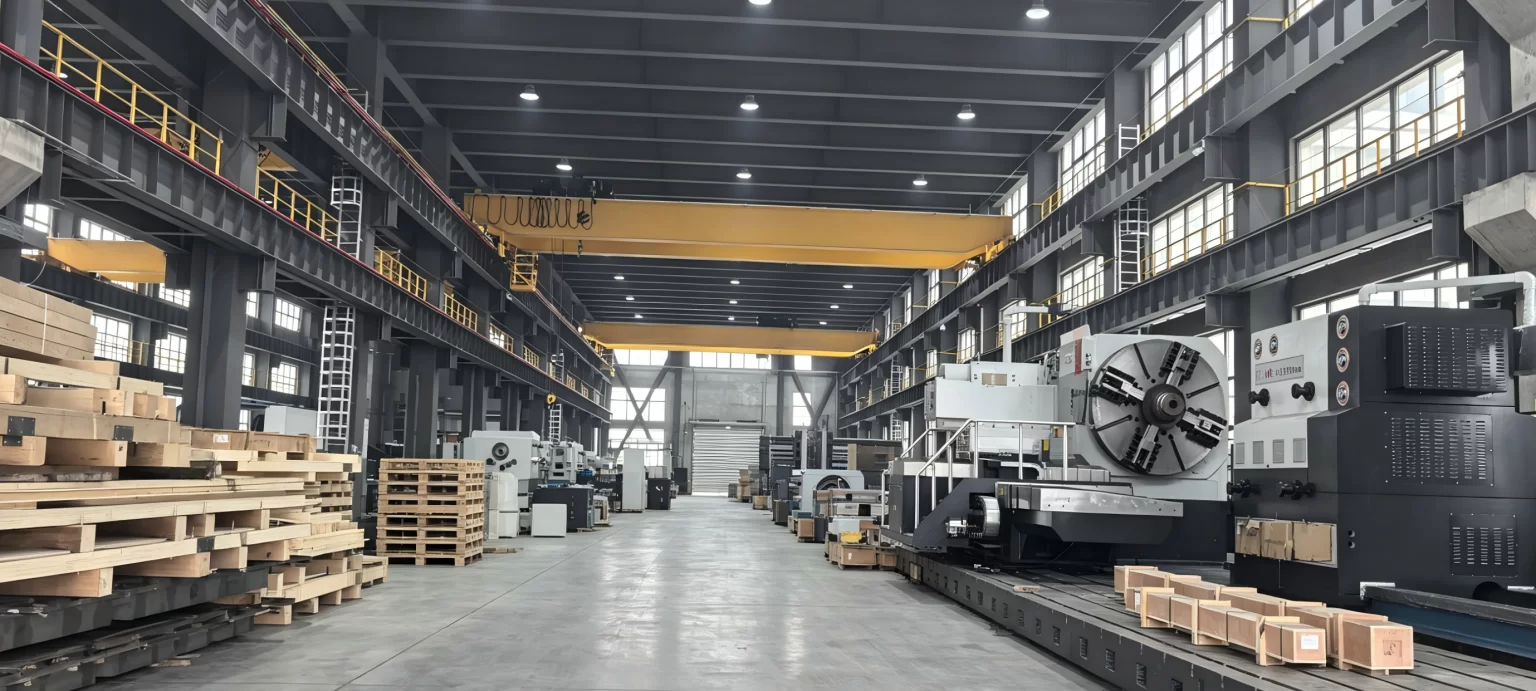
Who you are actually buying from
1. Manufacturer or trading company
Ask the question directly and expect a direct answer, because both models exist and each has a place. A manufacturer owns the drawing, the assembly and the final test, so a technical change is a decision it can make. A trading company controls the commercial relationship and buys machines in, which is an advantage when a project needs several machine types and one point of contact.
Not every machine tool supplier in China builds what it sells, and that is not automatically a problem — but you have to know which one you are dealing with, because the questions afterwards are different. With a manufacturer, ask for the factory address and a walkthrough of the assembly bay and the test area. With a trading company, ask which factory builds the machine, whether that factory’s own brand appears on the nameplate, and who signs the technical agreement and the warranty. DAHUI MT’s own development history is what a specific answer looks like: a named company, a factory, and a timeline rather than a slogan.
2. Depth of the product range
Range depth is a proxy for engineering continuity. A supplier with a structured series — the same bed casting, spindle family and control architecture carried across models — supports you through spare parts and operator familiarity for years. A supplier with forty unrelated models cannot say which component a machine bought four years ago shares with the current catalogue.
Test it with one question: for a machine purchased in the first year, can you still supply the spindle, the turret body and the ball screws, and for how long do you commit to doing so? Then look at how the range is documented. Series pages with configuration levels indicate an engineered family; a list of model numbers with no shared structure does not.
Build capability and the engineering behind it
3. In-house manufacturing steps
Machine tool quality is decided by a handful of steps: the casting and its ageing, the machining of the bed and the headstock, the scraping and alignment of the guideways, the assembly, and the final geometry test. Ask for the process list and mark which of those happen inside the supplier’s own plant. Few companies perform all of them, and that is normal. What is not normal is a supplier that cannot say where its castings come from.
This is the criterion where a factory visit pays for itself, and where a factory that cannot be visited is itself the answer. A real plant produces photographs as a matter of routine: a casting being aged, a bed being planed, an assembly bay with machines at different stages.
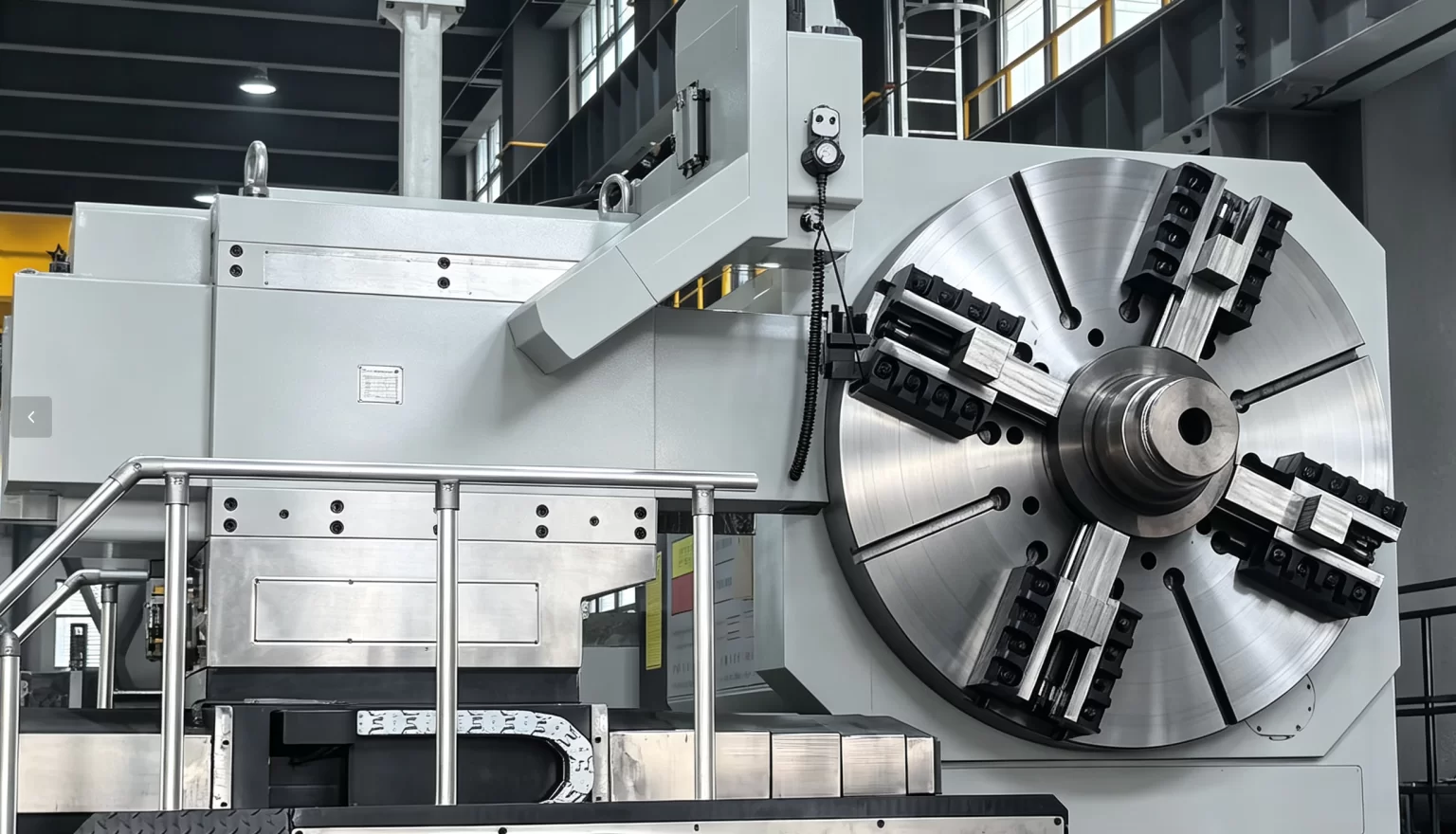
4. Engineering and application support
The most useful test of a machine tool supplier in China happens before you buy anything. Send a real workpiece drawing with a tolerance and a target cycle time, and ask which machine they recommend and why. The reply tells you whether an applications engineer or a salesperson read it, whether it quotes numbers or only models, and how long it took.
Establish the operating language and the escalation path as well. For an export customer, an answer in your language within one working day is worth more than a promise of support with no named person behind it. Ask who your technical contact will be, and whether machine parameters, PLC programs and electrical drawings will be supplied in a usable form.
The one-call test
Book a single video call and ask for three things: a walk through the assembly bay, the machine that most closely matches your requirement, and the person who will handle your technical questions. If any of the three is unavailable for reasons that have nothing to do with scheduling, the eight criteria are already down to one — the price.
Quality records and spare parts supply
5. Quality system and traceability
“We have a strict quality control system” is a sentence, not evidence. Evidence looks like an inspection plan that names the checkpoints, a geometry test report from a recent machine with the actual readings on it, and a record of the component brands and serial numbers fitted to a specific machine. Ask for the record from a machine built last month, not a blank template.
Any machine tool supplier in China can show a certificate, so check what it covers: the scope statement, the certification body, and whether that body is accredited. The difference between a certificate issued under an accreditation arrangement and a certificate-looking document from a commercial agency is the entire value of the paper. The International Accreditation Forum explains how accreditation works and maintains the directory you check a certificate against. Which documents to demand is covered in what certification a machine tool should have.
6. Spare parts and support after the warranty
This criterion determines total cost of ownership and is the easiest to dismiss during a price negotiation. Ask for the wear parts list — spindle bearings, belts, hydraulic components, seals, turret parts and way covers — with a part number, an indicative price and a lead time for each, then ask how long that numbering is committed to stay unchanged.
| Wear parts list | Named items with part numbers, indicative prices and supply lead times — a commitment, not a service brochure |
|---|---|
| Numbering continuity | How long part numbers remain valid for a machine after delivery, and what happens on a model change |
| Recommended first stock | The items worth holding on site from day one, ranked by failure probability and downtime impact |
| Downtime route | Who is contacted, in what time, and whether remote diagnosis of the control is possible before a part is ordered |
| Documentation | Electrical drawings, parameter backups and maintenance instructions, in a language your maintenance team reads |
| Escalation path | A named contact and a defined response expectation for technical problems, agreed before the order |
Export execution and commercial transparency
7. Export execution and documentation
A machine that is correct in the factory and damaged on arrival was packed by someone who had never shipped to your route. Ask how the machine is protected for sea freight: the rust-prevention method, the bracing inside the container, whether it travels in a case or as a heavy-lift unit, and what the packing specification says in writing. Then ask for the document set and check it against what your customs broker needs.
Destination experience matters more than the total number of countries. A supplier that has shipped to your market has already learnt the document set, the conformity route and the forwarder. For machinery placed on the EU market, the CE marking regime in the European Commission’s guidance on CE marking applies. The wider cross-border checklist is in buying a CNC machine from China.
8. Commercial transparency
The last criterion is how the supplier behaves when something changes, and it can be judged from the quotation before anything is ordered. A transparent offer separates the base machine from the options, names the Incoterm and the place where responsibility transfers, and ties payments to milestones. A vague offer bundles everything into one number.
Two sentences in the quotation are worth reading carefully. The first is the warranty wording: what is covered, for how long, and who pays the freight on a warranty part. The second is the change clause: what happens to the price and the date if the configuration changes after the order. Where the requirement needs a non-standard build, that process is covered in how a custom CNC machine is quoted and built.
What to ask for in writing
Every criterion has a document behind it. Request the six below as a pack before the shortlist is finalised; the way a machine tool supplier in China responds is as informative as the documents themselves.
| Company and plant | Full company name, factory address, business scope, and a video walkthrough of the assembly and test areas |
|---|---|
| Build process | The process list from casting to final test, marking which steps are performed in-house and which are outsourced |
| Quality records | An inspection plan plus a completed geometry and performance report from a recently built machine |
| Range and continuity | Series structure with configuration levels, and a statement of how long parts are supplied after delivery |
| Export pack | Packing specification, standard document set, and two references from destinations comparable to yours |
| Commercials | A quotation with the base machine and options as separate lines, Incoterm with named place, validity, payment schedule and warranty wording |
Want a worked example of the pack? See how DAHUI MT documents its manufacturing and testing capability → The page is written as evidence rather than advertising, which is the standard to hold every candidate to.
Red flags and the scoring sheet
Most of the risk in a machine tool purchase is visible before the order, in the form of small inconsistencies. These are the ones worth acting on immediately.
Signals worth proceeding on
- Direct answers about what is made in-house and what is bought in, including the foundry that supplies castings
- A factory that can be visited, or shown live on video, on your schedule
- Records from real machines: readings, test parts, component serial numbers
- Quotations that separate the machine, the options and the services, and that name the delivery term
Red flags
- No factory address, or an address that turns out to be an office or a warehouse
- Certificates in the supplier’s marketing that fail a check against the issuing body’s own register
- One bundled price with no option detail, and a delivery term left undefined
- Vague answers on spare parts, or price-only urgency: “this price is valid today”
Score the shortlist before you negotiate
- Criterion 1: name the party legally responsible for the build and the technical agreement
- Criterion 2: state the series structure and the parts continuity commitment in years
- Criterion 3: list the manufacturing steps performed in-house and the foundry source
- Criterion 4: record the response time and the quality of one real technical question
- Criterion 5: attach one completed inspection report from a recent machine
- Criterion 6: obtain a wear parts list with part numbers, prices and lead times
- Criterion 7: confirm the packing specification and the document set for your destination
- Criterion 8: verify that the quotation separates base machine, options and services
Weight the eight to suit the project rather than applying them evenly. A single machine for a job shop is mostly criteria 1, 4 and 6, because it has to be supported locally for years. A fleet purchase is mostly 3, 5 and 7, because consistency between machines matters more than the specification of any one of them.
Frequently asked questions
Is it better to buy from a manufacturer or a trading company?
Neither is automatically better; the mistake is not knowing which you are dealing with. A manufacturer gives you direct technical authority, drawings and change control. A trading company can offer a wider choice and one point of contact. What decides the outcome is whether the party that signs the warranty controls the build; if it does not, establish in writing who does.
How can I verify a factory without travelling to China?
Ask for a live video walkthrough at a fixed time, not a recorded clip, and choose the route yourself: the casting store, the bed machining area, the assembly bay and the test area. Ask the person holding the phone to open a machine control, read the model and serial number, and show the inspection record for the machine currently in test. Recorded footage cannot be interrogated; a live call can.
What quality documents should be supplied with a machine tool?
At minimum: the inspection and geometry test report for the machine delivered, the electrical drawings and parameter backup, the operating and maintenance manual in a language your team reads, lubrication and coolant specifications, and the component list identifying the control, drives and bearings fitted. Where your market requires conformity documents, name them in the order and have them supplied before shipment.
How much weight should price carry in the comparison?
It should be the last filter, not the first. Compare the offers on the same configuration — the same options, the same delivery term, the same acceptance scope — and only then look at the totals. When two offers differ substantially, the difference is almost always in the option list or the service scope rather than in the base machine.
What is the biggest mistake buyers make in China supplier selection?
Treating the supplier as interchangeable and negotiating only on price. That produces a shortlist of companies that look similar on paper and a decision made on the last number received — the environment in which a supplier with no factory and no spares commitment can win. Verification takes one week and changes the five years that follow.
Next step
Send us your shortlist, or make us one of them. Send the workpiece, the tolerance and the volume, and our engineering team will return a machine proposal with the manufacturing and testing steps behind it, the standard configuration and option list as separate lines, and the documentation set you will receive with the machine — the six documents above, in a form your own evaluation can be scored against.
Request the supplier evidence pack
WhatsApp: +86 15502628547 · Email: info@dhlathe.com
Tell us the market the machine will be installed in and the parts you need to produce. The proposal comes back with the build scope, the configuration and the document set stated explicitly, so it can be compared with any other offer.
