
Operation & Maintenance
CNC operator training works when it is tied to the machine, the parts and the programs the operator will actually run. The sequence matters more than the syllabus: safety and the machine’s stop logic first, before anything is allowed to move; then setting — workholding, offsets and tool data; then proving a program without cutting metal and measuring the first article; and only then production, with the in-process checks and the alarm behaviour that decide when to stop. Training that starts with programming and leaves the stop procedures until the end produces an operator who is confident in the wrong order.
The order to teach it in
Cnc operator training follows the wrong order by convention. Programming is the visible skill and the one people ask about, so it is usually taught first; the result is an operator who can write a turning cycle but cannot say confidently what the machine will do when the door interlock opens, or how to stop an axis that is moving towards a fixture. Starting with the stop procedures is not a formality — it is what makes the rest of the training safe to practise.
The order that works follows the way the operator’s day actually runs. Safety devices and stop logic come first, because everything afterwards is practised on a live machine. Setting comes second, because no program can be run until the workholding, the offsets and the tool data are correct. Proving a program comes third, and it is a skill in its own right: single block, feed and rapid override, the distance-to-go display and the first-article measurement. Production comes last, together with the in-process checks and the judgement about when to stop the machine rather than watch it.
Two practical points about pace. First, the sequence should be taught in one continuous block on the same machine, not split into generic classroom sessions with practical work later; the operator needs the two together to form the habit. Second, the operator who will run the machine should be in the room when the machine is commissioned, because that is when the geometry, the reference positions, the offsets and the first test cut are established. Watching that happen is worth several days of instruction afterwards — the reasoning is set out in the installation and commissioning checklist.
Safety and the stop logic
The first session covers what stops the machine and how. The operator should be able to demonstrate, not describe: the emergency stop and the reset procedure, the door interlock and what the machine does when it opens during a cycle, the feed hold and the difference between hold and stop, the axis inhibit and the single-axis jog, and the safe way to clear a jammed chip or a stalled tool. Each of these should be practised deliberately, at low speed, until the operator reaches for the right control without thinking about it.
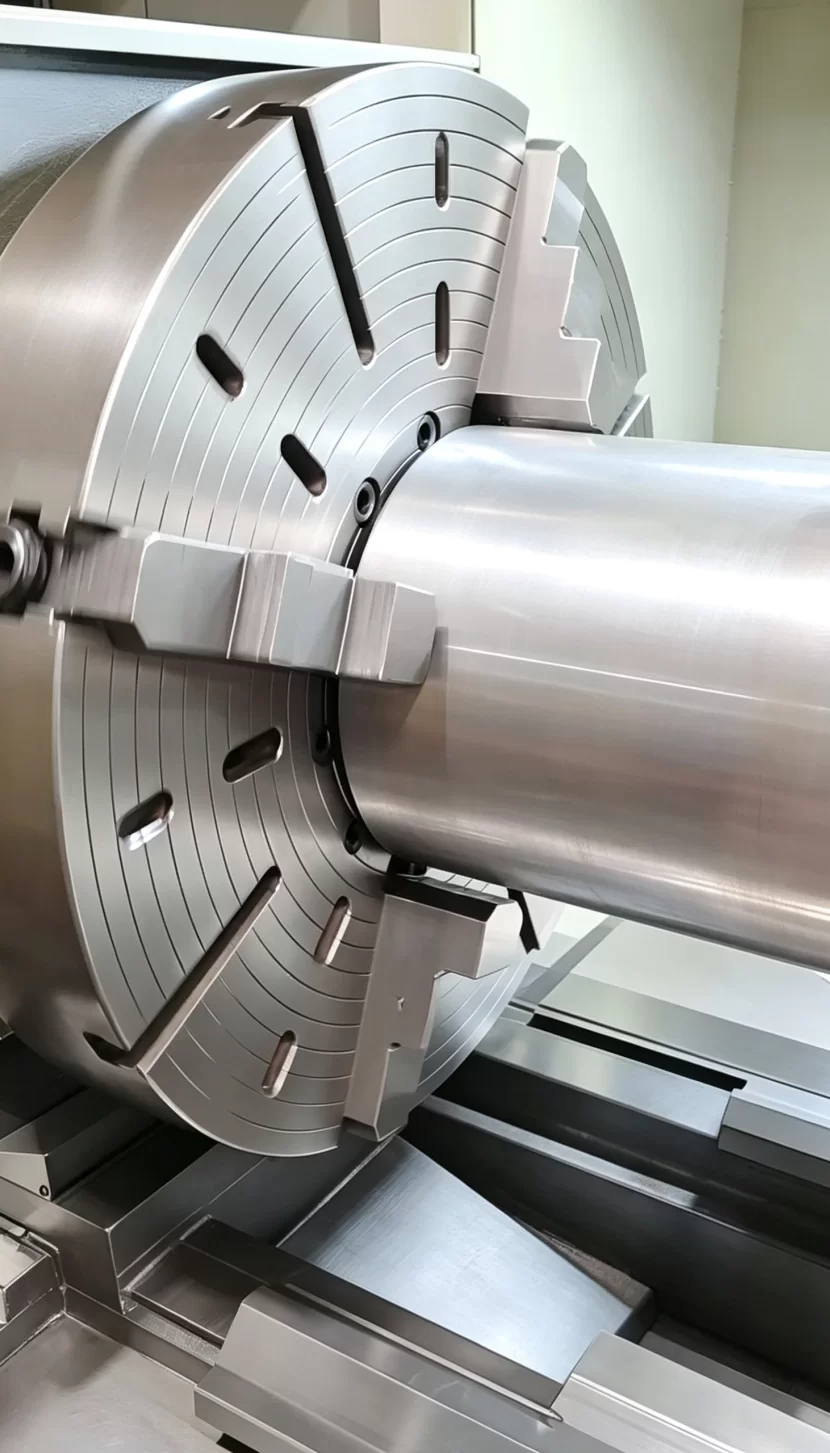
Workholding safety belongs in the same session, because it is the hazard that operators most often underestimate. Chuck clamping force falls as spindle speed rises, so a workpiece gripped securely at low speed is not held with the same force at high speed, and the safe speed for a jaw set is limited by the gripping arrangement as much as by the spindle. The operator should know where that limit is recorded for the chucks in use, and should understand why a heavy or long workpiece needs a steady rest or a tailstock rather than more clamping force.
The legal context is worth stating once, plainly, because it frames why the training is documented. In the framework used in the United Kingdom, the requirement that work equipment is used only by people who have received adequate information, instruction and training is set out in the Provision and Use of Work Equipment Regulations guidance, and the principle is common to most jurisdictions: the employer has to be able to show that the operator was trained and assessed, which is a record-keeping obligation as well as a training one.
Setting: workholding, offsets and tool data
Setting is where most production errors originate, and it is the part of cnc operator training that pays back fastest. Four elements have to be taught together, because a mistake in any one of them moves the tool to the wrong place.
The first is the reference return: how the machine establishes its position after power-up, what the operator should see when it is complete, and why an incomplete reference has to be resolved before any program is started. The second is the work offset: how the workpiece zero point is established for the part being made, how it is verified rather than assumed, and how it is changed when the same program is run on a different fixture. The third is the tool offset: how each tool’s length and geometry are measured, whether by touching off, by a presetter or by a tool setting probe, and what the operator is expected to check rather than trust.
The fourth is the workholding itself: the correct chuck or collet for the part, the jaw position and its effect on runout, the clamping pressure setting, and the condition that makes a jaw unfit to use. A worn jaw that no longer grips uniformly is a source of both accuracy problems and ejection risk, and the operator is the person most likely to notice it — provided somebody has told them what to look for.
Setting should be practised on scrap or on a test piece before it is practised on a real part, and it should be done repeatedly rather than demonstrated once. The measurement that proves the setting is correct is the same one used in production: a dial indicator, a first article or a gauge, read by the operator and written down.
Proving a program safely
The third stage teaches the operator how to find out what a program will do before it does it to a workpiece. This is a set of specific habits rather than a single technique, and each one exists because of a specific accident it prevents.
Read the program on the screen and check the tool numbers and offsets against the plan before anything moves. Then run it with the workpiece removed or the tool clear, using single block and a low rapid override, watching the distance-to-go display and the position readout rather than the tool. Then run it with a rapid override still reduced and the feed override low, and finally cut a first part with the override held back, measuring it before allowing the machine to run a second.
Two protective controls deserve to be taught as reflexes. The first is the distance-to-go display, which shows how far the axis still has to travel and is the most useful screen on the machine when a move looks wrong. The second is the feed hold, which should be reachable without looking. Between them they turn a suspected collision into a pause.
The first-article protocol should be written down and signed, not remembered. It is the point at which the setting, the offsets and the program are all confirmed together, and it is also the last cheap moment to find an error. Where the machine has a tool breakage detection function or an in-process gauge, the operator should know what it does and what it will not catch.
Running production
The final stage of cnc operator training converts a competent setter into a reliable production operator. It covers the in-process checks that catch drift early — a measurement at a defined interval, a surface finish comparison, a listening and temperature check on the spindle — and the judgement about when to stop the machine rather than watch it.
That judgement is worth teaching explicitly, because it is where experience normally accumulates by accident. The operator should know which alarms are warnings that permit the cycle to finish and which require an immediate stop, should know that a repeated alarm is never resolved by clearing it, and should know the rule that matters most: if a guard, an interlock or an emergency stop circuit is involved, the machine stops and stays stopped until the cause is found. The families of message to expect, and the diagnostic order that follows them, are set out in how alarm codes are read.
Production running also has a maintenance interface, and the operator needs it defined. The daily checks that belong to the operator — coolant, lubrication levels, wipers, chips and the safety devices — should be taught as part of the job rather than left to be discovered, and the recording of them should be part of the same session. The list is in the daily and weekly maintenance checklist.
Planning the training
Cnc operator training is more effective when it is planned as a project with a date and a deliverable rather than arranged as a visit. Four decisions make the difference.
| Who delivers it | Split the content deliberately: the machine and control fundamentals from whoever knows the control and the machine build, and the process and part-specific detail from your own senior operator. One alone leaves a gap — the outside trainer rarely knows your parts, and your operator rarely knows the control’s less-used functions |
|---|---|
| When it happens | Tie the training to commissioning. The machine is being levelled, aligned, referenced and test cut at that point, and the operator who watches it learns the machine’s baseline as it is set. Acceptance testing is covered in the leveling and alignment procedure and in the commissioning checklist |
| What is provided | The manual and the control documentation in the operator’s language, the parameter backup, the tool list with offsets, the program list, the reference and warm-up procedures, and the daily check sheet. Confirm the language before the training date, not on it |
| How long | Long enough to practise each stage rather than observe it. A workable pattern is days rather than hours: safety and stop logic, then setting, then proving, then production with the operator running the machine while somebody watches. The assessment is the point at which the trainer stops intervening |
It is also worth deciding in advance what happens to the knowledge after the trainer leaves. Two things preserve it: the written procedure for each stage, and a second person trained to the same standard so that holiday and absence do not remove the only person who can set the machine. The second operator is usually the least expensive insurance in the plan.
Signing off competence
A sign-off list turns training into something that can be verified, and it is the record an auditor or an insurer will ask for. The operator should demonstrate each item on the machine rather than describe it.
Safety and stop procedures
- Stops the machine with the emergency stop, resets it correctly and explains what it isolates
- Explains and demonstrates what happens when the door interlock opens during a cycle
- Uses feed hold, single block and the axis inhibit controls without hesitation
- States the safe speed limit for the chuck and jaw set in use, and where it is recorded
Setting
- Returns the machine to reference and recognises an incomplete reference
- Establishes and verifies a work offset for a new part, and proves it by measurement
- Measures and enters tool offsets using the machine’s own procedure
- Fits the correct workholding, sets clamping pressure and identifies a worn jaw
Proving and running
- Runs a program in single block with reduced override, watching distance-to-go
- Produces a first article, measures it and records the dimensions
- Performs the in-process checks at the defined interval and reacts to drift
- Explains which alarms require an immediate stop, and completes the daily check sheet
Frequently asked questions
How long does it take to train an operator on a new CNC machine?
It depends on what the operator already knows and what the machine will be used for, but the useful way to plan cnc operator training is by stage rather than by days. Safety and stop logic takes a session. Setting takes longer, because it needs repetition until it is habitual. Proving a program and producing a first article take another block. Running production with in-process checks is the stage that continues after formal training ends, with supervision. An experienced operator moving to a new control is much faster than a new operator moving to their first machine.
Should the operator be involved during commissioning?
Yes, and it is the single most valuable arrangement available. Commissioning is when the machine is levelled, aligned, referenced and proved, and when the offsets, the tool data and the first test cut are established. An operator who watches those steps learns the machine’s baseline and sees which readings matter, which is knowledge that cannot be reconstructed later from a manual. It also removes the usual gap between the people who commissioned the machine and the people who run it.
What is the most common training gap?
Programming is taught and stopping is not. Operators arrive able to write a cycle and unable to explain, with confidence, what the machine does when an interlock opens or how to bring a stalled axis to a controlled stop. The second most common gap is measurement: knowing how to set an offset but not how to verify it with an instrument. Both gaps have the same remedy, which is to make the operator demonstrate the procedure on the machine rather than watch it demonstrated.
Do we need a written record of the training?
Yes. The obligation to show that only adequately trained people use work equipment usually sits alongside the training itself, and the record is what discharges it: who was trained, on which machine, in which procedures, on what dates, and who assessed them. Keep it with the machine documentation so that the machine’s file contains both its build records and the evidence that its operators were competent to run it.
How many operators should be trained?
At least two per shift where the machine is on a production schedule. A single trained operator is a single point of failure: their absence stops the machine, which is a strange position for a capital asset to be in. The second person can be trained to the same standard, or trained to the setting and running stages with the programming and process decisions left to the first. Either way, the decision is cheaper to make before the machine is commissioned than afterwards.
Next step
Send the machine, the parts and the control, and get a training plan tied to them. Tell us the model, the control fitted, the parts the operator will run and the date the machine is due in production, and we will set out the training sequence that applies — the four stages, what the operator should be able to demonstrate at the end of each, and the documentation to have ready in the right language — so the training happens alongside commissioning rather than after it.
Ask about cnc operator training for your machine
WhatsApp: +86 15502628547 · Email: info@dhlathe.com
Send the control model and the part drawings the operator will work from. The plan comes back organised around those, with the sign-off list included.
