
Buying Guides
For a machine tool ordered from a manufacturer, the normal structure is a deposit at order and the balance before shipment, with the deposit typically around thirty per cent and tied to the material and castings the builder has to commit to first. What varies is not the shape of the schedule but who carries which risk at each step, and that is decided by the instrument: a bank transfer, a letter of credit, or a guarantee. Machine tool payment terms are therefore less about the percentages and more about matching each payment to a verifiable physical milestone.
Why machine tool orders are not paid on delivery
A machine tool is not taken off a shelf. The builder commits to castings, bought-in components, machining time and a slot on the assembly floor weeks before the machine exists, and those commitments are made against your order. A deposit is the mechanism that funds the start of that work; the balance before shipment is the mechanism that releases the machine once the buyer has verified it. Both sides are financing something: the buyer finances the start, the seller finances the build until the machine is ready.
That is why terms are usually stated as a schedule with milestones rather than as a single settlement, and why a supplier asking for very different terms is telling you something about how the order will be funded. A machine tool order paid entirely in advance removes the buyer’s leverage at exactly the moment when verification matters most. An order paid entirely on delivery asks the builder to finance a two to three month build from its own balance sheet, which in practice either raises the price or is refused.
The consequence for a buyer is straightforward. There is no single correct schedule, but there is a correct principle: every payment should be matched to something you can verify, and the largest payment should fall after the machine has been tested rather than before.
The instruments, and who carries the risk
Payment terms are written as percentages, but what actually decides the risk is the instrument behind them. The four below are the ones that appear in machine tool contracts.
| Instrument | How it works | Risk sits with | When it makes sense |
|---|---|---|---|
| Bank transfer (T/T) against deposit | Buyer transfers the deposit directly; the balance is transferred against agreed documents or an inspection certificate | Buyer, for the deposit; seller, for the balance until documents are presented | The common structure for a first order, provided the balance is tied to a verifiable milestone |
| Letter of credit at sight | A bank pays against a defined document set, for example the bill of lading and the inspection certificate | The issuing bank, once compliant documents are presented | Larger orders, first-time counterparties, or when the buyer’s own treasury requires bank intermediation |
| Usance or deferred letter of credit | Documents are released now, payment falls due at a stated later date | Shared: the buyer gains time, and the price usually reflects it | Projects where the buyer needs the machine in production before the settlement date |
| Demand guarantee or performance bond | A bank undertakes to pay the buyer a stated amount if the seller fails to perform against the contract | The seller’s bank, in favour of the buyer | Custom builds, long lead times and any order with a significant advance payment |
The instruments do not exist in isolation. The International Chamber of Commerce trade finance rules set out the standard frameworks for guarantees and documentary credits, and those frameworks are why a bank guarantee is worth more than a promise in an email: the undertaking is enforceable by the buyer’s bank rather than by the buyer alone. Where the payment schedule is linked to a delivery term, the two have to be read together, because the ICC Incoterms 2020 rules decide who pays for freight and insurance at each point and therefore who has money at risk while the machine is in transit.
One practical note for buyers outside the seller’s country: a letter of credit costs money and adds document handling, so it is worth it for larger orders and for first transactions, and usually not worth it for a spare parts order. The instrument should be chosen to match the size of the risk, not applied uniformly.
What a deposit actually pays for
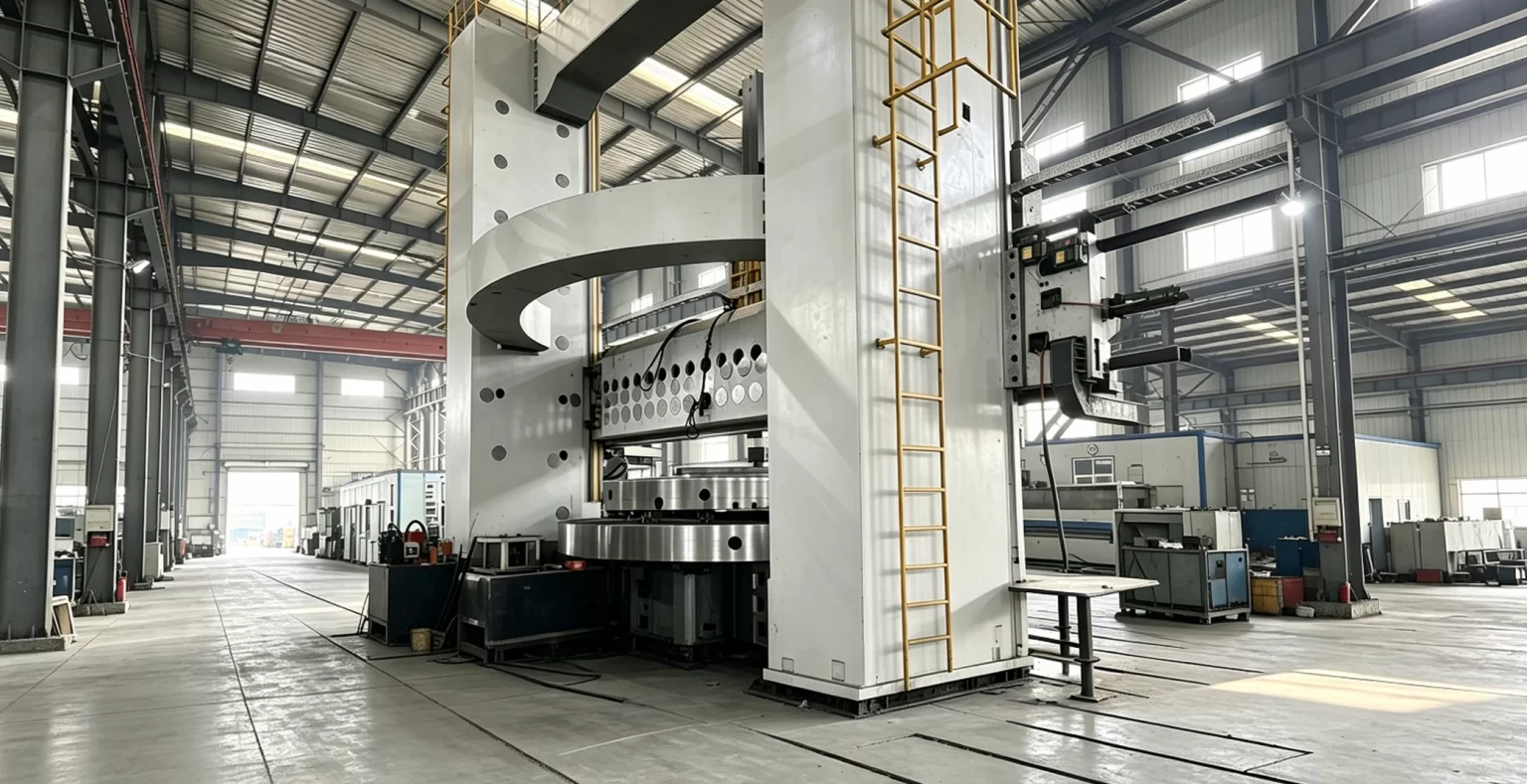
A deposit on a machine tool is spent before the machine looks like anything. The list is specific: the castings and any pattern work, the control and drive package, the spindle and bearings, the ball screws and guideways, and the machining capacity reserved for the build. On a configured machine most of that is a purchase order the builder places with its own suppliers in the first weeks. That is why deposits are partly non-refundable and why cancellation schedules step down in stages rather than returning the whole amount.
It follows that the buyer can reasonably ask for evidence that the money started work. Two or three photographs taken at fixed points — castings in the foundry or the casting store, the bed being machined, the machine on the assembly floor — cost the supplier very little and give the buyer a progress record. A schedule that includes a progress report at the halfway point is normal on larger orders and is a reasonable thing to request in writing rather than conversationally.
What a deposit should not be is the only payment clause in the contract. If the order is placed with a large advance and the schedule says simply “balance before shipment”, the buyer has transferred the money and retained no verification step. The balance clause is where the leverage lives.
Protecting the balance payment
The balance is usually the largest single transfer in the transaction, and it is normally due before the machine leaves the factory. Two mechanisms make that acceptable: an inspection that happens before the transfer, and a document set that is released against it.
The inspection is the important one. It should verify the configuration against the offer, the accessories against the packing list, the machine running under power, and the acceptance test that was agreed in the order as the record. Where the buyer cannot attend, the same inspection can be carried out by a third party, or by video with the machine identification number read from the control. Whatever the method, the sequence matters: inspect, then pay. A balance paid on a promise to inspect later is not a milestone payment, it is an advance.
The document set is the second half. Before releasing the balance, ask what will be presented: the packing list, the commercial invoice, the bill of lading or sea waybill, the test report, the declaration of conformity for the destination market, and the warranty statement. If the balance is being paid by letter of credit, those documents are what the bank checks against, which is exactly why the credit should be drafted by reference to them rather than written loosely.
Where a guarantee earns its cost
On a large advance, a bank guarantee or performance bond is the instrument that converts a supplier’s promise into an enforceable undertaking. It costs money and takes time to arrange, which is why it is priced by the buyer as an insurance premium against a small-probability, large-value event. On a custom build with a long engineering phase, that is usually the right calculation.
A schedule that follows the build
The useful test of any proposed machine tool payment terms is whether each instalment can be matched to something that has physically happened. The table below shows the milestones a schedule normally follows and the evidence that justifies each one.
| Deposit at order | Thirty per cent in the region of, released against the signed technical specification and the purchase order. Evidence: the countersigned specification, and confirmation that material and castings are ordered |
|---|---|
| Engineering release | On custom builds, a small instalment released when the drawings and control software are frozen. Evidence: the dated engineering release note |
| Mid-build progress | Optional. A progress instalment tied to a photograph or a video call rather than to a calendar date. Evidence: castings, bed machining, assembly stage |
| Pre-shipment balance | Sixty to seventy per cent, released after the agreed inspection and acceptance test but before dispatch. Evidence: signed inspection record, configuration check, test readings |
| Documents against payment | The document set is presented, and against a letter of credit the bank releases payment when the set is compliant. Evidence: bill of lading, packing list, invoice, test report, conformity documents |
| Retention or warranty bond | Optional on larger orders: five to ten per cent retained for a stated period, or replaced by a bank warranty bond. Evidence: the warranty period stated in the contract |
Two adjustments are common in practice. Where the machine is a standard model from a series with a short build time, the schedule collapses to two payments. Where the machine is an engineered special, the number of milestones grows and the engineering release becomes the date the rest of the schedule hangs from. Either way, the schedule should be written in the order, not agreed by email after it — and it should reference the same acceptance criteria as the specification, the subject of how a machine tool RFQ should be written.
Clauses that change what the terms cost
The percentages are the visible part of the terms. These are the clauses that quietly change the cost or the risk:
Clauses worth insisting on
- Currency stated, with the exchange-rate risk allocated to one side rather than left open
- Cancellation schedule stepping down by stage, so it is clear what is recoverable and when
- Delay provisions: a defined delivery date and a stated consequence for missing it
- Warranty period, start point and the freight responsibility on a warranty part
Clauses that hide the cost
- “Price valid for a limited period” with no stated validity, enabling a re-quote after the order
- Change of specification during the build with no written change process and no price adjustment rule
- Warranty that begins at dispatch, so the transit time is consumed out of the cover
- Payment to an account whose beneficiary name differs from the contracting party
On a first order, these clauses matter more than the last percentage. A schedule of thirty and seventy with a clear cancellation table, a defined delivery date and a warranty that starts on arrival is a better purchase than a schedule of twenty and eighty with no change control and a warranty that expires before the machine is commissioned.
Before any money moves
Most of the avoidable trouble in machine tool payment terms is settled before the first transfer, by checking a short list of things that are cheaper to verify than to dispute.
Commercial checks
- The contracting party, the invoice issuer and the bank account beneficiary are the same legal entity
- The machine tool payment terms in the purchase order match the offer, and the schedule is written into the order rather than agreed by email
- The validity period, the currency and the exchange-rate clause are all stated in the order
- The cancellation schedule and the warranty start point are written down and dated
Technical checks
- The technical specification is signed and its revision number appears in the order
- The acceptance criteria, the test part and the inspection method are agreed before the deposit is paid
- The document set to be presented against the balance is named, document by document
- The configuration and accessory list in the order matches the offer you compared
Frequently asked questions
What is a normal deposit for a machine tool order?
Around thirty per cent at order is the common structure, with the balance before shipment. The figure moves with the size and the type of the order: a standard machine from a series can be built against a smaller deposit because the builder carries less unrecoverable material cost, while a custom build with new patterns and a long engineering phase usually justifies a larger first payment and a schedule with more milestones. What matters more than the exact figure is that the deposit is tied to a signed specification and that the balance is tied to an inspection.
Should I pay the balance before or after I see the machine?
After. The sequence inspect, then pay, then dispatch is the one that keeps the leverage with the buyer, and it is compatible with a balance-before-shipment clause: the inspection happens at the works, the record is signed, and the transfer follows immediately. Where the buyer cannot attend, a third-party inspection or a video walkthrough with the machine identification number read from the control serves the same purpose. Paying the balance and then arranging to look at the machine reverses the order and removes the only real protection in the schedule.
Are letters of credit worth the cost?
For a first order of significant value, usually yes. A letter of credit makes the bank check a defined document set before money moves, which converts a commercial promise into a documentary process, and it protects both sides: the seller is paid against documents rather than against an intention, and the buyer’s payment is released only when the stipulated documents exist. For a small spare parts order the paperwork and bank charges normally exceed the risk being covered, and a simple transfer against a proforma invoice is the sensible instrument.
What happens if the machine is late?
Whatever the order says happens. That is why the delivery date belongs in the order with a consequence attached, rather than in a quotation as an estimate. Two clauses do the work: a defined date, expressed as a band or a calendar date with a stated trigger for when it starts, and a stated consequence for overrun, whether that is a liquidated amount, extended warranty or a right to cancel. Without them the only remedy is a conversation, and machine tool payment terms with no delivery consequence leave the buyer holding the risk of the delay.
Can the terms be changed after the order is signed?
By written agreement, but the interesting question is what the change does to the total. Moving a payment later usually raises the price, because the seller is financing the build for longer; moving a payment earlier usually lowers it or buys an option. So a negotiation about machine tool payment terms is really a negotiation about price against risk, and it should be run together with the scope comparison rather than separately. The lines that are actually worth trading are set out in what a machine tool quotation leaves out.
Next step
Tell us the schedule your own treasury needs. Send the machine or the requirement, together with the payment structure your finance department can accept — deposit level, milestone or letter of credit, retention, and the currency — and we will respond in writing with the structure, the cancellation schedule, the delivery date with its trigger, and the document set to be presented against each payment. On larger or custom orders we will also say what a bank guarantee would require. The lead time that sits alongside the schedule is explained in how a machine tool lead time is quoted, and the supplier checks that sit in front of both are in how to evaluate a machine tool supplier in China.
Ask about payment and settlement
WhatsApp: +86 15502628547 · Email: info@dhlathe.com
Send the proforma invoice or draft contract you have been given as well, if there is one. We will mark the clauses that need changing before it is signed.
