
Buying Guides
A machine tool RFQ that returns an accurate quote is a specification, not a request for a price list. It carries the workpiece and its material, the operations and the accuracy you have to hold, the machine configuration with the options that go with it, the workholding and tooling, the market the machine will be installed in, and the commercial and delivery terms. Twelve blocks in total. Give a builder those and the answer is a defined machine with a real price; leave them out and the only honest answer is a range.
Why a machine tool RFQ comes back as a price range
A machine tool is not a catalogue item with a list price. It is a configuration: a base machine, a spindle, a control, a turret or tool magazine, a workholding solution and a set of options, assembled around a particular workpiece. The price follows the configuration, so a builder who has not been given a configuration cannot produce a price — only a band that starts at the smallest machine in the range and ends at something nobody has specified.
That is why two buyers can approach the same factory and receive figures that differ by a factor of two. One sent a drawing, a material, a tolerance and a cycle-time expectation; the other sent a sentence, please quote a CNC lathe. The first produced a quotation that can be compared, negotiated and signed. The second produced a range that cannot be compared with anything.
The most expensive sentence in procurement
“The machine has to be accurate and reliable” is not a requirement, it is a wish. It cannot be measured, so it cannot be accepted or rejected, and it cannot be priced. Every time a machine tool RFQ contains a wish instead of a number, the builder has to assume something — and the assumption will be the cheaper of the two options until the order is signed.
Everything unclear at the enquiry stage is either guessed by the builder or priced as a risk, and a contingency added to cover an unknown requirement is charged to you whether or not it ever materialises. If the machine is a lathe, the selection logic itself is covered in how to choose a CNC lathe; this article deals with the document you send once that decision is made.
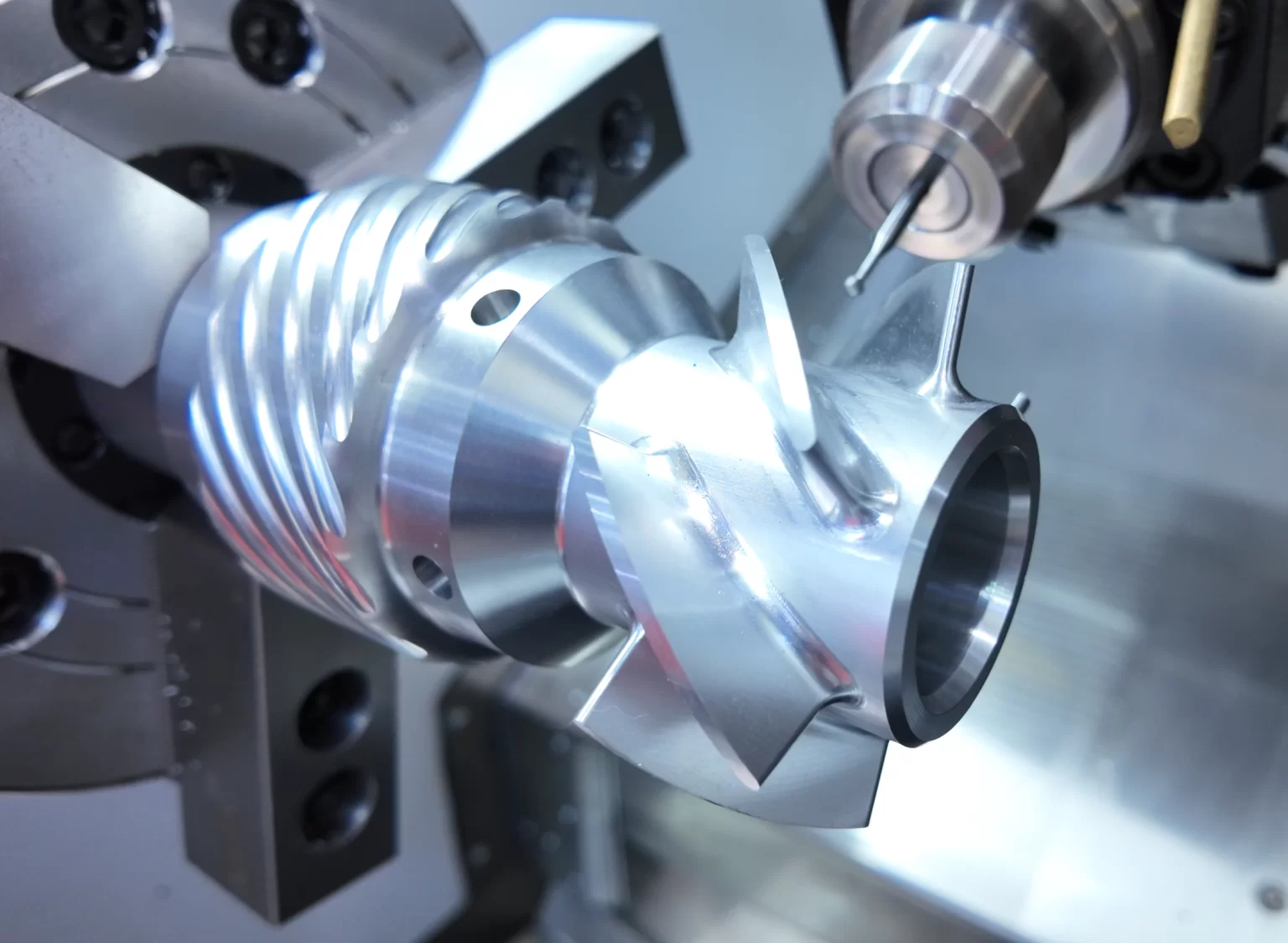
The 12 blocks a machine tool RFQ needs
This is the data set an applications engineer needs before a machine can be selected and priced: the first three blocks come from the drawing, the next four define the machine, the following two define how the result is accepted, and the last three are commercial.
| # | Block | What has to be in it | Where it comes from |
|---|---|---|---|
| 1 | Workpiece | Drawing or 3D model, material and hardness, blank form (casting, forging, bar, plate), finished mass and max dimensions | Process or design department |
| 2 | Operation set | Which features are machined on this machine, whether it is a single-setup or multi-setup process, and which features stay on an existing machine | Route sheet / process plan |
| 3 | Volume and cycle time | Annual volume, batch size, prototype quantity, required cycle time per part, shifts per day and planned machine utilisation | Production planning |
| 4 | Machine type and size | Turning or milling architecture, and the size parameter that governs the range: swing over bed, chuck size and turning length, or table size and axis travels | Derived from blocks 1–3 |
| 5 | Spindle and axis specification | Speed range, bore or taper, power and torque, spindle nose, C-axis or indexing requirement, number of axes and any live tooling | Derived from part geometry and material |
| 6 | Control and automation | Control brand and series, PLC or M-code interfacing needs, bar feeder, gantry loader, robot interface, chip conveyor, tool presetter, automatic door | Automation plan |
| 7 | Workholding and tooling | Chuck type and jaw detail, steady rest, tailstock, collet or fixture, turret or magazine positions, holder type to be used for each operation | Process engineer |
| 8 | Accuracy and capability | Geometric accuracy and positioning repeatability required, plus the production tolerance that must be held with process capability evidence | Quality department |
| 9 | Acceptance | The test part or test cut, the measurement record to be supplied, the standard followed, who witnesses the test and where it takes place | Quality and procurement, agreed jointly |
| 10 | Market and conformity | Country of installation, supply voltage, phase and frequency, safety and EMC requirements, conformity route and the language of the manual and labels | Compliance function |
| 11 | Commercial terms | Incoterm and named place, currency, offer validity, payment terms, warranty duration and scope, spare parts list with recommended first-year stock | Procurement |
| 12 | Delivery and logistics | Required lead time or required date on site, packing standard, container loading constraints, documentation language, installation and training scope | Procurement and project management |
Two notes on using the table: write blocks 4 and 5 as requirements rather than preselected models, and mark any block you cannot answer open rather than omitting it.
Workpiece, process and volume
The drawing is worth more than a page of adjectives, but only if it arrives with the material, the blank form and the feature size range. A 45 HRC forging and a free-cutting aluminium casting of the same finished geometry can need two different machines, because cutting force and tool life are not comparable. Naming the material and whether it is heat treated before or after machining tells the builder where on the power and rigidity scale the machine has to sit.
The operation set is the block most often left to the supplier to guess. Write down which features are machined in the process you are buying, in what order, and which stay on other machines. If three operations on three machines have to become one, that changes the machine class entirely — it usually means a turning centre with live tooling rather than a plain two-axis lathe.
Volume turns a technical answer into a commercial one. Forty pieces a year and forty thousand justify different levels of automation, and the cycle time you need per part decides the spindle power far more often than the maximum diameter does. Give the volume, the batch size and the shift pattern the machine will work, and send a photograph, a sample and a tolerance table if the part cannot be described on a drawing.
Machine, spindle, automation and tooling
Write the size parameter that actually constrains the machine: for a lathe the swing over bed, the chuck size, the maximum turning length and the bar capacity; for a machining centre the table size, the axis travels and the maximum workpiece mass. Sizing from the finished diameter alone is the classic error, because the workpiece has to fit inside the machine with its fixture, its tooling and its safety clearances.
The spindle specification follows from the material and the cycle time; the control and automation specification follows from the labour model. If the plan is one operator to two machines, say so, because it changes the requirement for a bar feeder, a gantry loader and automatic door operation. The DAHUI MT CNC lathe range lists the standard configuration of each series, which is a useful baseline for marking what you want added or removed.
Workholding deserves its own paragraph rather than a line in the annexe. State the chuck type, whether the jaws are standard or special, and whether the workpiece needs a steady rest, a tailstock with a rotating centre, or a fixture that does not yet exist. Special jaws and fixtures carry their own lead time and are frequently the reason a machine cannot be released into production on the promised date.
Say what you want, not what you will accept
“Options: as standard” is a decision, and it should be a deliberate one. If you write it, you have agreed that the builder’s standard configuration is acceptable — including the parts of it you have not read. Mark the options you need, the options you must not have, and the ones you are open to, in three separate lines.
Accuracy, acceptance and the test part
Accuracy has to be split into three numbers, because a machine can be good at one and ordinary at another. Geometric accuracy covers straightness, squareness and parallelism of the axes, checked statically. Positioning accuracy and repeatability describe how close an axis gets to a commanded position and how tightly it returns. The third is the one that decides the project: the production tolerance you must hold on the finished part, demonstrated on a real part, with capability recorded over a run of pieces rather than a single measurement.
Making that third number explicit is what turns a purchase order into an acceptance protocol. Write the tolerance with its reference, the surface finish, the material, the number of consecutive pieces that must be produced within tolerance, and how the part will be measured — on which instrument, at what temperature, by whom.
| Geometric accuracy | Straightness, squareness and parallelism of axes, with the standard and the tolerance value named rather than described as “high precision” |
|---|---|
| Positioning performance | Positioning accuracy and repeatability per axis, stated as a distance over a stated travel with the measuring method identified |
| Workpiece capability | The production tolerance to be held on the actual part, the material, and the number of consecutive parts produced within tolerance |
| Surface finish | Ra value with the feature it applies to, so it is not applied to the whole drawing by default |
| Test part | The drawing of the acceptance part, or a clearly defined test cut if the part is confidential, plus who supplies the blank material |
| Records | The measurement report to be issued, its language, and whether the readings are taken cold, after warm-up, or both |
| Witness and place | Whether acceptance happens at the builder’s works, on video, or on your site, and who signs the protocol on each side |
Market, commercial terms and delivery
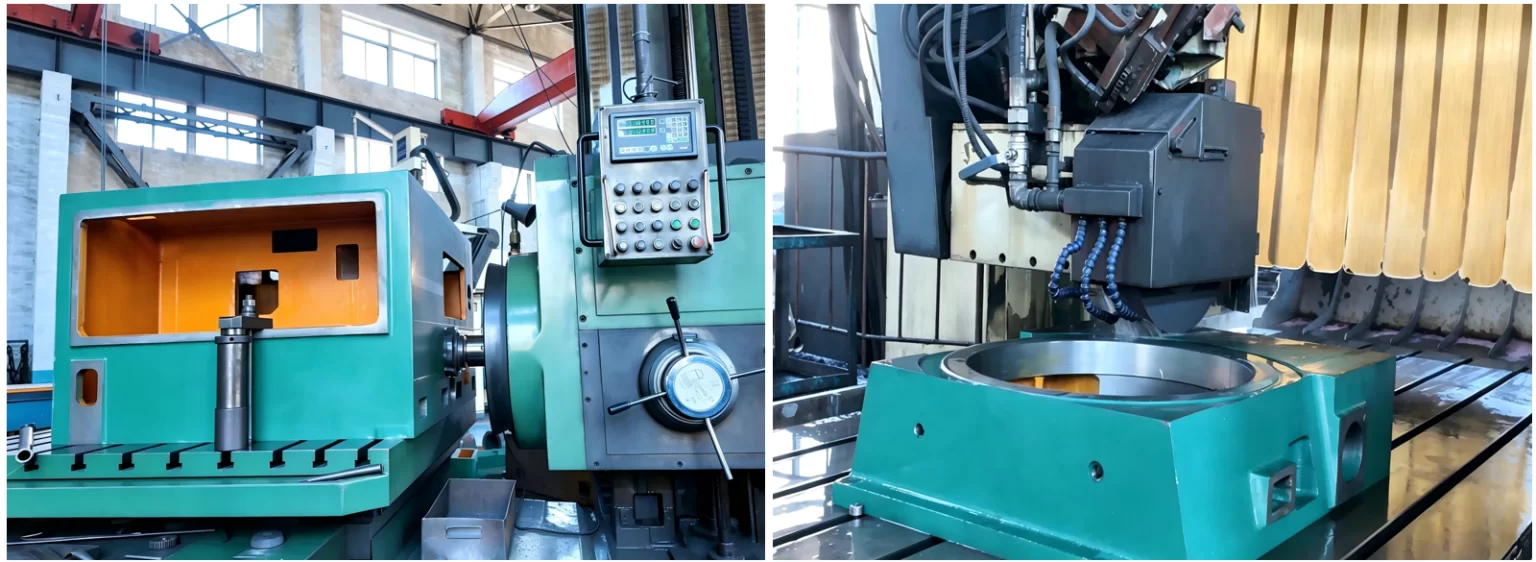
Where the machine will be installed changes the offer, so say it in the first paragraph rather than the last email. The country of installation determines the supply voltage, phase and frequency, the language of the manual, labels and control screens, and the conformity route the machine has to travel. For machinery placed on the EU market that route is the CE marking regime set out in the European Commission’s guidance on CE marking; other markets have their own, and the RFQ should name the one that applies to you.
Commercial terms belong in the same document as the technical specification, because they are what makes two offers comparable. The Incoterm and the named place define where the price stops and your cost begins, and the definitions are published in the ICC Incoterms 2020 rules. Ask for the offer validity, a payment schedule tied to milestones, the warranty duration and what it covers, and the recommended spare parts list. Omitting the spares list is the most common false economy in a machine tool RFQ.
Finally, write the lead time as a defined interval with a start condition, because a figure without a start point is not a commitment. State the date you need the machine in production, the place it has to reach and the packing standard for that route. Why a machine is typically quoted between 30 and 90 days is set out in how a machine tool lead time is quoted.
Four things that make a quote unusable
A quotation can arrive quickly, look complete and still be impossible to evaluate. These four faults are the usual reasons a tender has to be restarted.
What a usable quote contains
- A named machine or clearly defined build, with the base configuration and every option listed line by line
- Requirements answered in the order they were asked, with anything not met marked as such rather than silently dropped
- Commercial terms in the same document: Incoterm and place, validity, payment schedule, warranty, spares list
- A revision number and date on every page, cross-referenced to your RFQ revision
What makes it unusable
- A price with no configuration behind it — no model, no option list, no scope of supply
- Requirements that cannot be measured, so the offer has quietly answered a different question
- Terms added afterwards, where the price is fixed first and the conditions are negotiated against a deadline
- Silent changes: your RFQ was revised, the offer was not, and nobody can say which version was priced
The cost of a revised RFQ is not the paperwork but the two or three weeks lost while the comparison table is rebuilt. Version control — a number, a date and a short change note — is inexpensive insurance.
The RFQ checklist
Work through this list before the machine tool RFQ leaves your desk. Each line is a document or a number, not an intention.
What to attach
- Part drawing or 3D model, with the revision level you are releasing to enquiry
- Material specification, including heat treatment condition and blank form
- Tolerance and surface finish schedule, feature by feature
- Annual volume, batch size and the required cycle time per part
What to state
- Machine type and the size parameter that governs the range
- Spindle, axis and automation requirements, with the labour model behind them
- Workholding, steady rest, tailstock and tooling to be used
- Accuracy, acceptance criteria and the test part, with who measures and where
What to agree
- Country of installation, supply conditions and conformity requirements
- Incoterm with named place, currency, validity and payment schedule
- Lead time band, required date in production and packing standard
- Warranty scope, documentation language and first-year spare parts list
Want to see how the blocks map onto a real build? Compare the standard configuration of the DAHUI MT lathe series → The series pages list what is included at each level, which makes it easier to mark the options your RFQ adds or removes. The commercial framing around those options is explained in the factors that drive CNC lathe price.
Frequently asked questions
How long should a machine tool RFQ be?
Long enough to contain the twelve blocks and short enough that nobody has to search for them. In practice that is two to four pages: a summary of the requirement, the workpiece data, the machine requirement, the acceptance criteria and the commercial terms. Length is not the goal — completeness against the table is. A four-page RFQ with every block answered will be quoted accurately; a twelve-page one that leaves the tolerance out will not.
Should I send the same RFQ to several suppliers?
Yes, and that is precisely why the document has to be specified rather than described. Three suppliers answering the same twelve blocks can be compared line by line; three suppliers answering an open question will each answer a different question. Where the drawings are confidential, an anonymised version that keeps the critical tolerances is standard practice.
Do I have to specify the machine model myself?
Not unless you want to. One approach is to specify the workpiece, the volume and the acceptance criteria and let each builder propose the machine, which gives the widest comparison. The other is to name the model because you already run it and want a fleet of identical machines, which has value in training, tooling and spares. Both work; the failure mode is a mixture.
What should the enquiry ask about acceptance testing?
Three things: what will be measured, how it will be measured, and who signs. Ask for the geometric and positioning readings, the test part, the number of consecutive parts produced in tolerance, and the measurement report in the language you need. State whether the test is witnessed at the works, observed on video, or repeated at your site.
Why does the same requirement get quoted at very different prices?
Usually because the offers contain different machines and the difference is hidden inside the option list. One offer may include a tool presetter, a chip conveyor, hydraulic chucks and a spare parts kit; another may leave all four to a later purchase order. Ask every supplier to price the same optional items as separate lines, so the base machine and the options can be compared.
Next step
Send us the part, not the model number. Send the workpiece drawing, the material, the tolerance you must hold and your required production date, and our engineering team will come back with the machine configuration that fits, the options that are genuinely needed, and a quotation written against the twelve blocks above — so it can be compared with any other offer line by line.
Send your RFQ for an engineering review
WhatsApp: +86 15502628547 · Email: info@dhlathe.com
Attach the drawing, the material specification and the tolerance schedule. If any of the twelve blocks are still open, say so and we will work through them with you before quoting.
