
Operation & Maintenance
A cnc lathe maintenance checklist works when it is a short routine performed often, plus a record that makes the results comparable over time. The daily round is coolant, lubrication, hydraulics, air, chips and safety devices: levels, flows and leaks, checked in a few minutes at the start of a shift. The weekly round adds cleaning and inspection — wipers, chuck, tailstock, turret, cabinet cooling, filters, backup battery. Everything else follows the intervals in the machine manual and the lubrication chart, because those intervals depend on the machine, the duty and the environment rather than on a general rule.
Why a checklist beats a schedule
Most machine tool failures that halt production are not sudden. They are the end of a slow process: a lubrication line that blocked weeks ago, a coolant concentration that drifted, a wiper that stopped wiping and let fine swarf onto a guideway, a hydraulic oil temperature that has been rising a degree a month. Each of those is observable long before it becomes a breakdown, and each is observable only if somebody looks at the same things in the same order and writes the result down.
That is the case for a checklist over a maintenance schedule. A schedule says when to change the oil; a checklist says what to look at this morning and what the number was last week. The two work together, and the second is the one that catches the failures the first cannot predict. It is also the reason the record matters as much as the check: “lubrication level normal” tells nobody anything, while a lubrication consumption figure that has doubled in three weeks tells you which line to inspect.
Two principles keep the routine alive in a busy shop. Keep the daily round short enough to be done properly at the start of a shift rather than rushed at the end of one. And put the interval-based work in the manual’s own terms, so the schedule can be adjusted for duty instead of being re-derived from scratch.
A checklist that is not written down is not a checklist
The value comes from repetition against a record, not from the act of walking round the machine. If the readings are not written down, the trend they would have shown is lost — and the trend is what turns a maintenance routine into a way of predicting problems instead of discovering them.
The daily round
The daily checks divide into fluids, mechanisms and safety. Each one takes less than a minute, each has a specific failure mode behind it, and each therefore belongs on the cnc lathe maintenance checklist as a line with a number against it.
| Area | What to check | What it is protecting against |
|---|---|---|
| Coolant | Level in the tank, concentration measured with a refractometer, flow at the nozzles, no leaks at the pump or the return | Poor surface finish, tool wear, rust on the machine and rancid coolant from concentration drift |
| Way lubrication | Oil level in the central lubrication unit, pressure or cycle indication, and the consumption against the previous shift | Guideway and ball screw wear from a blocked or starved lubrication point |
| Hydraulics | Oil level, oil temperature, system pressure, visible weeping at hoses and joints, and the sound of the chuck clamping | Loss of clamping force, drifting pressure, and oil on the floor where somebody will slip |
| Compressed air | Pressure at the machine, drained water trap, condition of the filter regulator lubricator | Water in the pneumatic valves, erratic tool change or chuck operation |
| Chip management | Conveyor running and clearing, chip bin not overflowing, coolant return screen clear | Coolant flooding, chips carried back to the tank, and jams that stop the machine mid-cycle |
| Guideway wipers | Wipers present, clean and undamaged along the full travel | Fine swarf embedded in the guideways, which is the fastest route to loss of accuracy |
| Spindle warm-up | Run the warm-up program from the manual before precision work | Tolerance errors on the first parts of the day and thermal drift during precision cutting |
| Safety devices | Door interlock, emergency stop, chuck guard and covers — tested, not assumed | The failure mode that no maintenance schedule can compensate for |
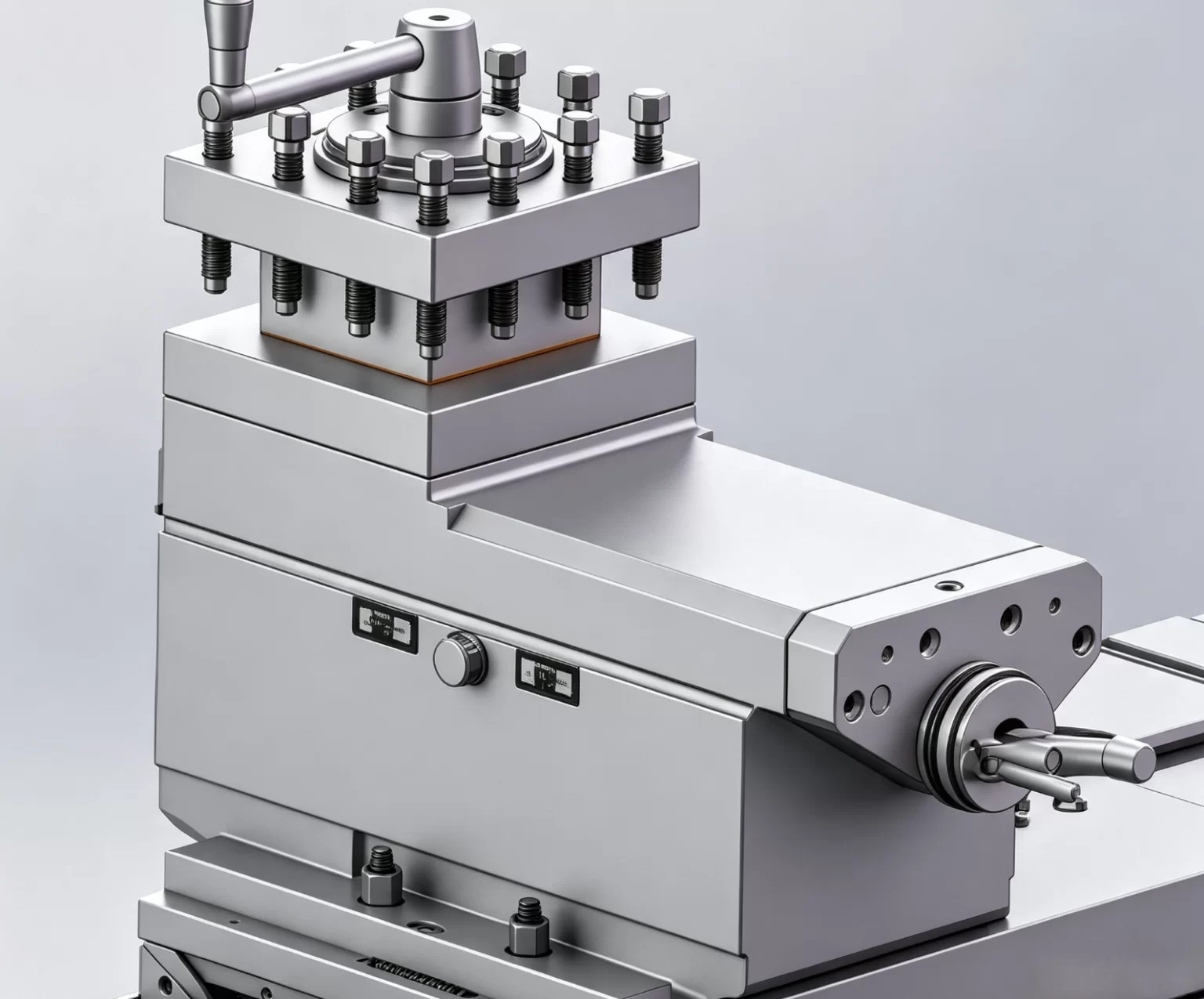
Two of those deserve a sentence more than the others. The warm-up routine is a scheduled operation rather than a check, and on a machine used for precision work it belongs in the daily routine as firmly as the coolant level does, because the first part of the day is otherwise measured against a different thermal state from the last. Guideway wipers are the least expensive component on the machine and the one whose failure produces the most expensive damage, because embedded swarf turns a smooth guideway into an abrasive surface.
The weekly round
The weekly round is where cleaning and inspection take over from watching levels. It is also the point at which a good cnc lathe maintenance checklist starts to pay for itself, because most of these items are invisible from the operator’s position during a shift.
Cleaning and fluid condition
- Clean or replace the coolant tank screens and the return filters, and skim tramp oil from the surface
- Check coolant colour and smell, and confirm concentration still in the range the coolant supplier specifies
- Clean the chip conveyor discharge and inspect the conveyor for damaged or tight links
- Inspect hydraulic oil through the sight glass for colour and cloudiness, and check the filter indicator
Mechanisms
- Chuck: clean the jaws and the scroll, grease to the manual’s schedule, check for a jaw that has lost its grip pattern
- Tailstock and quill: lubrication, condition of the centre, and smooth operation through the full stroke
- Turret or tool changer: index accuracy, unusual noise, correct seating, and clean tool mounting tapers
- Guideway wipers along the full travel, replacing any that are worn or lifting
Electrical and data
- Cabinet cooling: fan filters cleaned or replaced, cabinet cooler operating, no dust build-up on the drives
- Battery status for control memory and absolute encoder backup, replaced on the interval in the manual
- Parameter backup verified — the copy held off the machine opens and is from the current set
- Alarm history reviewed and cleared of anything unexplained, not simply acknowledged
Periodic work, driven by the manual
Everything with an interval expressed in running hours, months or cycles belongs to the machine’s own documentation: the lubrication chart, the maintenance schedule and the component suppliers’ instructions. The reason for following those rather than a general rule is that the correct interval depends on the machine, on how hard it is working and on the environment, and the difference is not cosmetic. A machine running three shifts in a foundry and a machine running one shift in a clean workshop do not share a maintenance interval, even when they are the same model.
What that periodic list normally covers, in the manual’s own terms: way lubrication oil changes, hydraulic oil sampling and replacement, coolant replacement and tank flushing, filter replacement, belt tension and replacement, ball screw and linear guide lubrication, chuck clamping force measurement, backlash checks, geometry and level re-checks against the installation baseline, and battery replacement. The guidance on the maintenance of work equipment makes the general point that matters here: maintenance is a requirement of ownership, and the record of it is what demonstrates that the machine has been looked after. Lubrication specifically — type, quantity and interval — is worth following the lubricant and bearing manufacturers on, because lubrication is where incorrect practice does the most damage; SKF’s lubrication guidance is a reasonable reference point for that.
Two items on the periodic list of any cnc lathe maintenance checklist are not maintenance in the everyday sense but belong with it. The first is the geometry check, compared against the readings taken at installation — without a baseline it proves nothing, which is why the leveling and alignment record matters months later. The second is the spare parts decision: knowing which items fail first, and holding the ones that stop production, is part of the same discipline.
Recording and trending
The record is what converts a routine into information. Three rules make it useful rather than decorative: write numbers rather than ticks wherever a number exists, keep one sheet per machine so a machine’s history is not scattered, and record the action taken as well as the observation. A sheet that says “coolant concentration measured, topping-up added, next reading due tomorrow” can be acted on; a sheet that says “coolant OK” cannot.
For a cnc lathe maintenance checklist, the entries worth trending are the ones that move before a failure: lubrication consumption, coolant concentration, hydraulic oil temperature, spindle temperature at a fixed time after start-up, chuck clamping pressure, and the number of alarms in a shift. None of them needs instrumentation beyond what the machine already has, and together they describe the machine’s health in a way that no single reading can.
The early signals worth reacting to
React, and investigate the cause
- Lubrication consumption rising over weeks — inspect the metering units and lines before adding oil and moving on
- Spindle temperature at start-up higher than the recorded baseline — check lubrication and cooling, then bearing condition
- Surface finish drifting on the same program and the same tool — check wipers, chuck grip and guideway condition
- Alarms repeating in the same area — treat as a developing fault, following the diagnostic order for CNC alarms
Avoid
- Topping up a fluid without asking where it went
- Acknowledging an alarm without recording the text and what the machine was doing
- Replacing a failed component without checking what caused it to fail
- Leaving the daily round until the end of the shift, when the machine is warm, dirty and about to be left
What the check sheet should contain
| Machine identification | Model and machine number, so the record follows the machine and not the operator or the bay |
|---|---|
| Date, shift and initials | Who checked what, and when — the basis of any later comparison |
| Item and target | The check itself and the value or condition expected, taken from the manual rather than from memory |
| Reading | The measured value where one exists: level, concentration, pressure, temperature, consumption |
| Action taken | Topping up, cleaning, adjusting, or “none” — recorded explicitly so the absence of action is also a decision |
| Follow-up | The item needing further work, the person responsible and the date, so nothing is closed by being forgotten |
| Periodic items due | The manual-scheduled work falling due in the coming period, flagged in advance rather than discovered |
| Alarm log reference | Where the shift’s alarms are recorded, so the maintenance record and the fault record meet in one place |
A sheet of this shape survives an audit and, more usefully, survives a change of personnel. That is the practical test of a cnc lathe maintenance checklist: if the operator who takes over the machine next month can read the last three months of entries and know what state the machine is in, the checklist is doing its job. The installation record described in the commissioning checklist is the first entry in the same file.
Frequently asked questions
How long should the daily check take?
Long enough to do properly and short enough to be done every shift: the fluids, the wipers, the chips, the sound of the machine and the safety devices. The practical test is whether the person doing it has time to write the readings down. A daily round that takes twenty minutes and produces six numbers is worth more than a thorough inspection that is skipped whenever production is busy, because the trend is what gives the routine its value.
What should actually be recorded, and what can be left as a tick?
Anything that has a number belongs in the record as a number: coolant concentration, lubrication consumption, hydraulic temperature, air pressure, spindle temperature after a fixed warm-up period. Items that are genuinely pass or fail — a wiper present or not, a guard intact or not, a leak visible or not — can be a tick, but the exception has to be written in words rather than as a cross. The distinction matters because failure modes develop gradually in the numeric items and suddenly in the others.
Who should do the daily checks, the operator or a maintenance technician?
The daily round belongs to the operator, because it is performed at the machine before work starts and describes the machine’s condition for that shift. The weekly round sits at the boundary and is often shared: cleaning and inspection by the operator, and electrical cabinet, backup and lubrication-system work by a technician. Periodic work driven by the manual belongs to whoever is competent for it, and it should be signed off as such. A cnc lathe maintenance checklist that has no named owner for each row is a list of good intentions.
Do the intervals differ if the machine runs multiple shifts?
Yes, and this is where following the manual’s own units pays off. Intervals expressed in running hours or in spindle hours scale with duty, while intervals expressed in calendar weeks do not. A machine running three shifts will reach an hour-based interval three times faster than one running a single shift, which is why the schedule should be rebuilt against the actual running hours rather than left at the default numbers for a single-shift workshop.
How does the maintenance record connect to fault diagnosis?
It gives the fault a history. When a fault appears, the questions are always the same: has this happened before, what changed, and what was recently touched? A record that holds both the maintenance entries and the alarm history answers those questions in minutes rather than in a phone call. That is why the alarm text and the machine’s condition at the time are worth recording in the same file, along with the maintenance actions taken around the same date.
Next step
Ask for the maintenance schedule for your machine, not a generic one. Send the model and the shift pattern the machine works, and we will return the lubrication chart and maintenance schedule that apply to it, with the daily and weekly items separated from the periodic ones and the intervals stated in hours where the machine’s duty makes that the honest unit — together with the check sheet layout so the records start on day one. The machine-side information behind it is on the lathe series pages.
Request the maintenance schedule and check sheet
WhatsApp: +86 15502628547 · Email: info@dhlathe.com
Tell us the model, the shifts per day and what the machine cuts. The schedule comes back with the intervals set for that duty rather than for a single-shift default.
