
Operation & Maintenance
Machine tool shipping is decided by three things, all of which have to be settled before the machine is packed: how it will be protected against corrosion and impact for the length of the voyage, how it will be braced and secured inside whatever it travels in, and which documents will travel with it. The packing specification, the loading plan and the document set belong in the order. The sequence afterwards is straightforward — clean and protect, brace, load, secure, document, unload against a plan — and almost every loss comes from one of those three decisions having been left to the day of dispatch.
The sequence, and where it goes wrong
There are only six steps, and they happen in a fixed order: protect the machine’s surfaces, pack and brace it, load and secure it, complete the documentation, transport it, and unload it against a plan. Machine tool shipping goes wrong in three predictable places.
The first is corrosion. A machine tool is largely bare, precision-machined steel, and it crosses climates in a container that can hold warm humid air against cold metal for weeks. Rust prevention is not an oiling before dispatch; it is a specified treatment with a moisture-control strategy, and it has to be appropriate for the voyage length and the climate. Damage from corrosion is often invisible until the machine is unpacked, which is exactly why it must be prevented rather than inspected for.
The second is movement. A machine tool is heavy, and weight is not the same as security: a mass that is not positively blocked will shift under repeated ship motion, and lashing alone relies on friction that may not exist on a steel container floor. The bracing and the lashing plan are a design exercise, not a matter of adding straps until it looks secure.
The third is documentation. A discrepancy between the invoice, the packing list and the transport document is a customs delay, and a customs delay with a machine tool on the quay is expensive per day. The documents are cheap to prepare correctly and impossible to correct quickly from the other side of the world.
The specification that prevents most claims
Ask for the packing specification in writing and for photographs of the machine packed, braced and marked, taken before the container is sealed. Photographs are the record that decides who pays when something arrives damaged — and asking for them changes the way the machine is packed.
Packing and corrosion protection
Corrosion protection starts with the surface. Machined and ground surfaces, guideways, ball screws, spindle tapers and unpainted castings are treated with a rust-preventive coating appropriate to the voyage, applied to a clean and dry surface — applying protection over coolant residue keeps the moisture underneath it. Where the treatment must be removed before the machine runs, that is stated in the documentation.
Moisture control is the second element and the one most often omitted. Sealed barriers with desiccant, or vapour-phase corrosion inhibitor film, keep humid air away from the metal; without them, a container that breathes through the voyage will condense water onto cold surfaces. The required strategy follows from the route and the season, which is why the destination and the shipping period belong in the packing decision rather than being discovered at dispatch.
Impact protection and packaging format come third. The choice is between a containerised machine, a machine in a case, and a heavy-lift unit on a flat rack; each has consequences, and the decision is driven by the machine’s dimensions and mass and by the destination’s unloading capability.
Marking belongs in the same step. Lifting points, centre of gravity, mass, the “this way up” orientation and any handling restrictions should be marked on the machine or the case where a rigger will see them, and the same information should appear on the packing list so unloaders at the destination have it before the machine is opened.
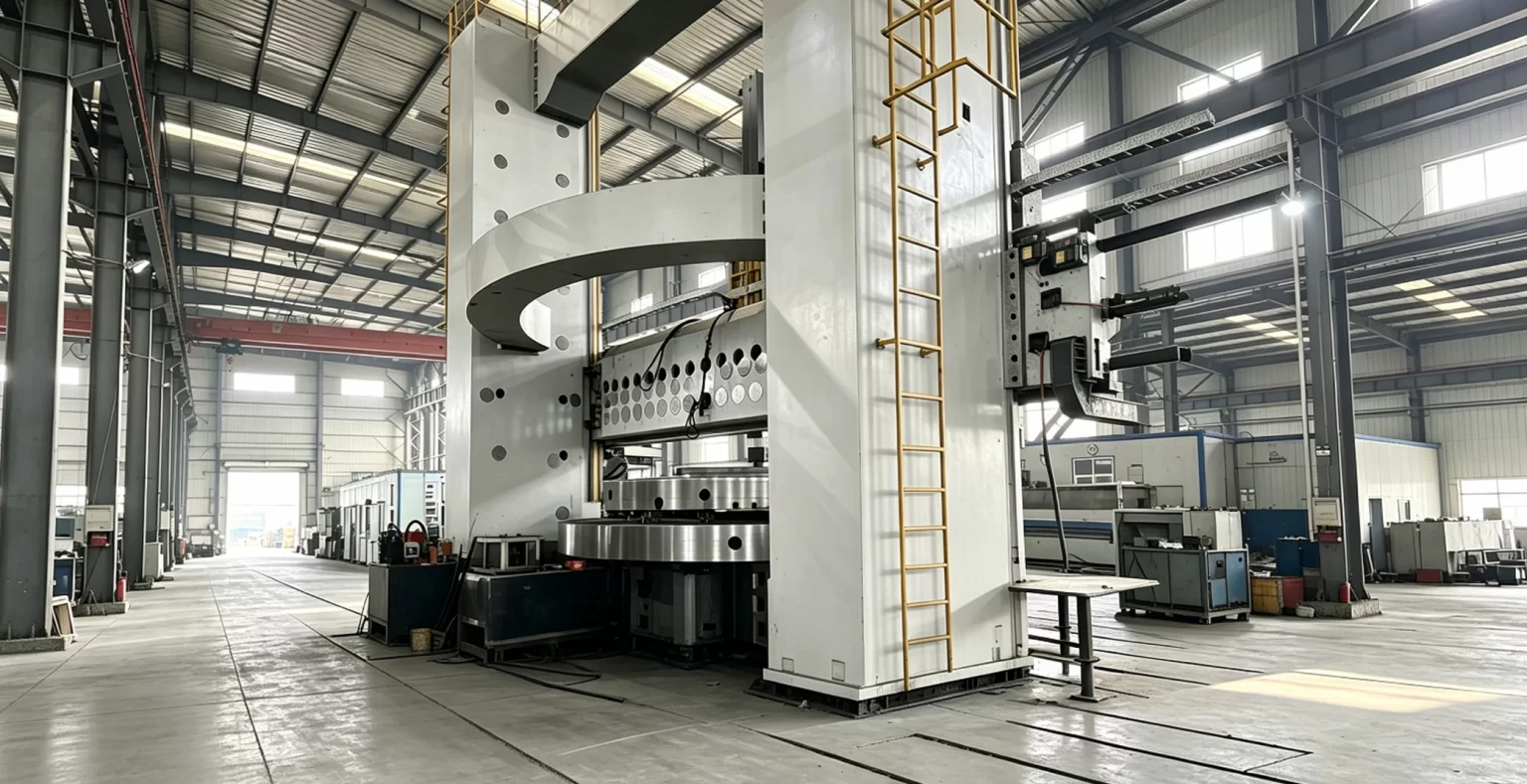
Container loading and securing
Every machine tool shipping plan begins with whether the machine goes in a container at all. Three figures decide it: the machine’s packaged dimensions against the container’s internal dimensions and door opening, its mass against the permitted payload, and the headroom required to lift or slide it into position. A machine that is a few centimetres too tall for the door, or that cannot be lifted once inside, is a problem discovered at the loading dock unless the figures were checked first.
Inside the container, the load has to be distributed as well as secured. Concentrating a heavy machine at one point can exceed the floor’s rated load and will also affect the handling of the unit. The machine’s mass should be transferred to the container floor through the intended bearing points, with timber or steel packing under the feet rather than the machine resting on a few high spots of its own base.
Securing is the step where the plan matters most. The requirement is to prevent movement in three directions, and the reliable way to do it is positive blocking — timber or steel members bearing against the machine and against the container structure — combined with lashing at designed points, with the lashings angled so that they resist fore-and-aft and lateral movement rather than only holding the machine down. Lashing through or over a machined surface, or over a component that cannot take the load, damages the machine on the voyage; the lashing points should be identified in the loading plan, not chosen on the day.
Where the machine travels as a heavy-lift unit rather than inside a container, the same logic applies with a different vocabulary: the lifting plan, the skidding arrangement, the sea-fastening design and the survey. The lifting and rigging side of the operation is the part with formal requirements attached — the framework described in the Lifting Operations and Lifting Equipment Regulations guidance is one national expression of a principle that applies anywhere: rated equipment, known lifting points, and a plan made before the load is in the air.
The delivery term decides who does what
Machine tool shipping arrangements are distributed by the delivery term, and the term is not a price label but an allocation of cost and risk. The published definitions are the ICC Incoterms 2020 rules, and the three elements to establish for whichever term applies are the same in every case.
| Where responsibility transfers | The named place in the term, stated explicitly. Everything before it is the seller’s risk and everything after it is yours — which is why the packing specification matters even under terms where the seller loads |
|---|---|
| Who arranges transport | Whether the seller books the freight or the buyer does. This determines who chooses the carrier, who can expedite, and who holds the transport document |
| Who insures, and for what | The insurer, the insured value and the risks covered. Cover at the minimum level implied by some terms may not reflect the machine’s value or the consequential cost of a delay, and the difference is worth checking rather than assuming |
| Who unloads, and with what | Unloading at the destination is frequently excluded, and it requires equipment rated for the mass and an access route measured in advance. A machine that cannot be unloaded on arrival is a machine that accrues charges |
| Which documents travel | The set required by the term and by the destination’s customs authority, agreed before dispatch rather than assembled afterwards |
Two of those deserve emphasis because they are the ones buyers most often assume rather than confirm. Insurance arranged by the seller under a term that only requires minimum cover may leave the gap between the machine’s value and the insured value with you. And unloading at the destination is the point at which a machine can be dropped: the crane or forklift capacity, the ground condition and the access route all have to be established locally and compared with the machine’s mass before the ship arrives.
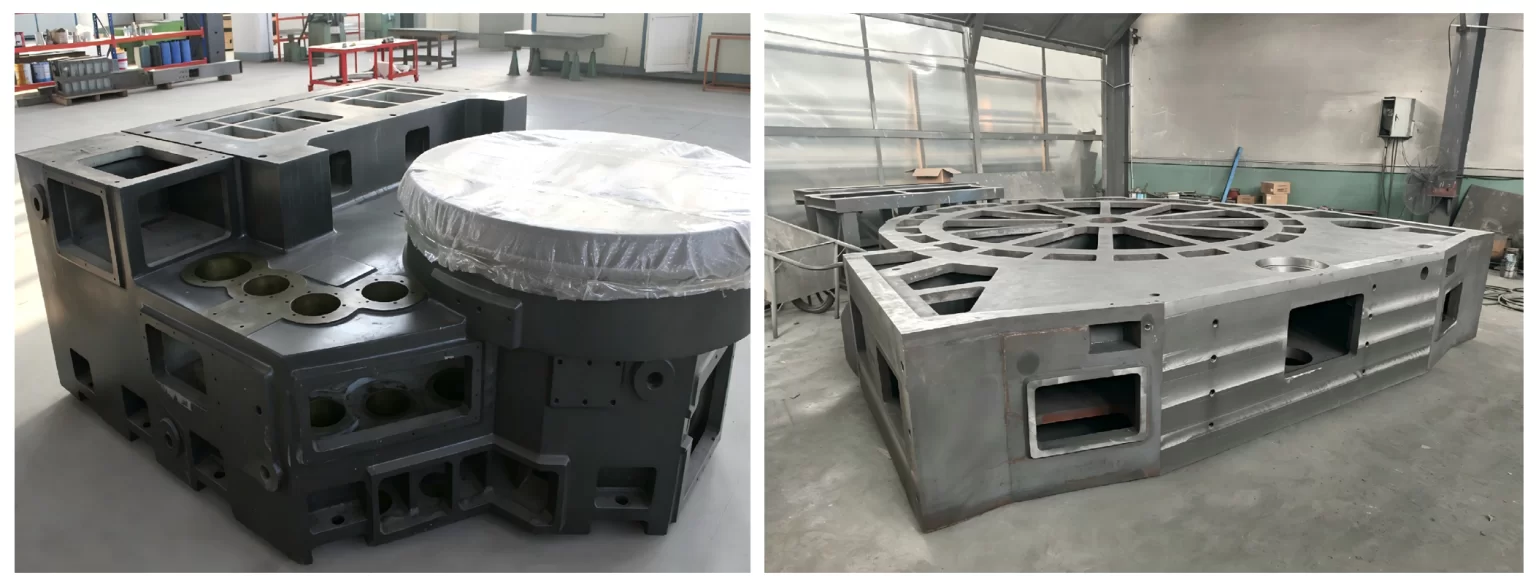
Documentation
The document set has one requirement above all others: the same facts appear the same way on every document. A machine described with three different names, or a mass that differs between the packing list and the transport document, is a customs query — and a customs query holds the machine in a port where nobody can work on it.
- Commercial invoice: the machine described exactly as it appears on the order, with the option list consistent across the set
- Packing list: every package, its dimensions, mass and contents, including accessories packed separately
- Transport document: the bill of lading or waybill, consistent with the delivery term and the named place
- Certificate of origin, where the destination’s tariff treatment depends on it
- Insurance certificate, with the insured value checked against the machine’s value rather than assumed
- Conformity documents for the destination market — the declaration required there, for this machine, in the right language
- Packing specification and packing photographs, kept with the file rather than only in an email thread
- Export and import classification data, agreed with whoever is clearing the machine at each end
The packing and freight elements of all this are cost lines in the commercial offer, and they are the ones most often left vague. Reading the offer against the delivery term — the exercise described in what a machine tool quotation leaves out — is the point at which the gap between “shipped” and “delivered” becomes visible.
Planning the arrival
Arrival is where the plan is tested, and the work divides into three parts: unloading, customs, and unpacking.
Unloading requires equipment rated for the package mass, an access route measured against the package dimensions, and ground capable of taking the weight of the machine and the handling equipment together. This should be confirmed locally before dispatch, because a crane that is not available on the day is a machine sitting on a quay accruing charges. The lifting points marked on the package or the case are the ones to use, and the rigging should be planned by somebody competent rather than improvised.
Customs clearance depends on the document set and on whoever is clearing the machine having it in advance rather than on arrival. Where a customs authority asks a question about the machine’s description or classification, the answer normally comes from the invoice and the packing list, which is another reason for consistency across the set.
Unpacking is the moment for evidence. Anything that looks like transit damage should be photographed before it is touched, and the condition recorded against the packing photographs taken at dispatch, because a claim is decided on the comparison between the two. Then the machine is moved to its position, and the installation begins — the sequence for which is set out in the installation and commissioning checklist. One specific item belongs on the unpacking list: the transit braces and shipping locks, which have to be removed before the machine moves. A brace left in place is invisible until the first rapid traverse, and by then it has usually broken something.
Frequently asked questions
How should a machine tool be protected against rust in transit?
Machine tool shipping protection is a specified treatment rather than a general oiling: the machined and ground surfaces cleaned and dried, a rust-preventive coating applied that is appropriate to the voyage length and the climate, and a moisture-control strategy around the machine — a sealed barrier with desiccant, or vapour-phase inhibitor film, or both. The treatment has to be removable at the other end without damaging the surfaces, and the removal procedure should be in the documentation so nobody starts the machine with the coating still in place.
Container or break-bulk? How is that decided?
By dimensions, mass and the destination’s handling capability. A machine that fits inside a container within the door opening and the payload limits, and can be lifted or slid into place, is normally containerised for the protection it gives. A machine that exceeds those limits travels as a heavy-lift unit on a flat rack or platform, which requires a sea-fastening design, a lifting plan and often a survey, but which may be the only option for a large machine. The decision also depends on the route: some vessels and some ports handle one better than the other.
Who pays for the transport?
Whoever the delivery term says, at the named place it specifies. That is the whole purpose of the term: it allocates cost and risk at a defined point. The practical consequence for a buyer is that the machine’s price is only comparable with another offer when both carry the same term and the same named place. Where the term leaves freight and insurance with the seller, check the insurance value; where it leaves them with you, price them before comparing totals.
What if the machine arrives damaged?
The claim is decided on evidence, and the evidence has to be captured before anything is moved or cleaned: photographs of the damage, the packaging as it arrived, the transport document with any remark recorded at the time of receipt, and a comparison against the packing photographs taken at dispatch. Report it to the carrier and the insurer within the period the transport document and the policy allow, because those limits are short. Cleaning up or repairing first, and reporting afterwards, is what turns a valid claim into an argument.
How long does shipping take, and what can be done about a delay?
Transit time depends on the route, the service and the number of transhipments, and it is worth confirming as a range from the freight forwarder rather than as a single figure. What a buyer can influence is not the voyage but the preparation: complete documents prevent customs delays, a confirmed unloading plan prevents port charges, and an agreed delivery term with a stated named place prevents the argument about who is responsible while the machine waits. A pre-shipment inspection completed before dispatch is also part of that preparation, because a machine that has to be corrected after packing adds delay to the front of the schedule.
Next step
Send the destination and the route, and get the packing and loading plan. Tell us the machine, the destination port and the intended shipping period, and we will set out the packing specification for that route, the loading plan with the blocking and lashing arrangement, the document set that travels with the machine, and the figures your local unloader needs — dimensions, mass and lifting points — in time to check the crane rather than after it fails to arrive. The inspection that closes the machine’s file before dispatch is covered in preparing for pre-shipment inspection, and the build records that travel with it at how DAHUI MT documents its machines.
Ask about machine tool shipping and packing
WhatsApp: +86 15502628547 · Email: info@dhlathe.com
Send the destination port and the discharge address if it is inland. Unloading arrangements are decided at your end, and the figures have to reach your rigger in advance.
